Tuesday, November 3, 2009

Swamp Godd Oracle


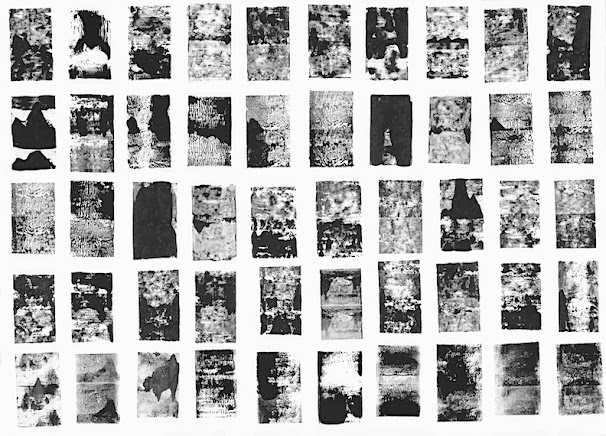
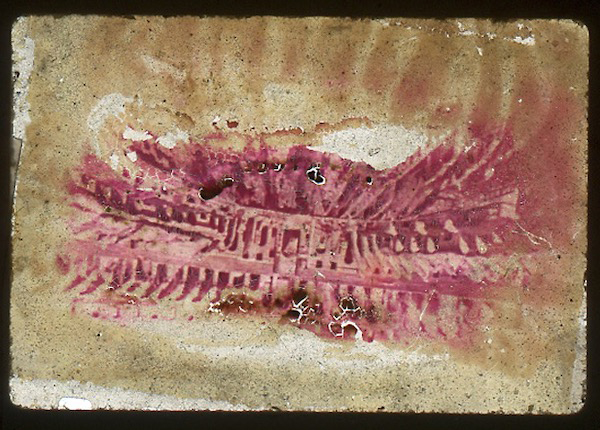
"Charles Burchfield — an Ohio native who spent most of his career in Buffalo and environs — is best known for his midperiod landscape watercolors: nostalgic Depression-era views of dilapidated small-town architecture or already-crumbling industrial infrastructure in the style that came to be known as American Scene Painting or Regionalism. Its main proponents were Thomas Hart Benton and Grant Wood, and it has generally (if unfairly) been regarded in retrospect as a reactionary retreat into academic realism after the initial impact of the European Modernists after the 1913 Armory show in New York. Fans of this phase of Burchfield’s artistic evolution won’t be disappointed in this show; there are a dozen strong examples, including several, such as the nearly-abstract monochrome Night (undated), in which the balance between his nervous vision and the prosaic naturalism of his chosen style tips waaay to the dark side.

If Burchfields’s career had ended there, it would have been one kind of story. Because in spite of his popular and critical success as an illustrative painter of scrap-metal yards and snowbound factory towns, he had started out painting loose, swooping, color-saturated mystical scenes of nature built largely from an abstract symbolic alphabet of his own device. At the tender age of 24 Burchfield concocted more than 200 of what he referred to as “Conventions for Abstract Thoughts”— simple, biomorphic abstract forms defined by the interplay of dark and light, each one representing a specific emotional state: “Aimless Brooding,” for example, or “Dangerous Brooding,” “Morbid Brooding,” or “Imbecility.” Smells like teen spirit!


This remarkable (and long-lost) pictographic lexicon amounts to a singular declaration of American Modernism, and it’s where guest curator Robert “Culvert-through-the-BVM” Gober chooses to begin exploring Burchfield’s oeuvre. Using his invented abstract vocabulary, Burchfield grappled with what appears to have been a tremendous angst load, transforming his units of brooding and melancholy into components of a seething, psychedelic landscape whose pervasive vitality overwhelmed any petty motivations of self-pity. Instead, Burchfield’s self-indulgence took a different turn. Between 1916 and 1918 he produced hundreds of watercolors — half his lifelong output — each one teeming with symbolic portent, decorative inventiveness and a dreamlike animism where the ominously anthropomorphic or blankly inert architecture of human civilization appears to be in a cosmic struggle with the wildly vibrating energies of the natural world. The Insect Chorus (1917), for example, affords only a background glimpse of the stylized gables of a house almost entirely engulfed in arabesque clouds of foliage, which, in turn, mutate indiscernibly into layered graphic patterns representing the songs of crickets, cicadas and katydids.

It’s not surprising that when arch-Modernist Alfred Barr chose Burchfield for the first solo exhibition at New York’s newly founded Museum of Modern Art in 1930, it wasn’t the contemporaneous work — moody Hopper-esque street scapes like Winter Twilight (1930) — that he included but rather a selection of 27 of these exuberant, intricately coded, synaesthesia-induced fever-dreams from more than a decade earlier. Yet in spite of this belated institutional endorsement, Burchfield continued to hew his path through the decidedly unmystical Regionalist swamp — as Gober details in drolly titled chronological galleries titled “Wallpaper and Marriage” (referring to Burchfield’s lengthy 1920s stint as a wallpaper designer), “Public Acclaim or The Great Depression” and “War and Doubt.” If Burchfield had died in 1942, we would be left with a narrative arc describing a troubled, gifted youth overcoming profound psychological demons and reining in the extravagances of his talent to become an accomplished, well-adjusted, contributing member of society (while coincidentally abandoning introspective European-style Modernism for a meticulously crafted, socially responsible, populist pictorialism.) But Burchfield didn’t die. Burchfield went a little crazy."


Read the rest of American Dreaming: Charles Burchfield’s Imagination; Bridled and Otherwise here

More info on the Heat Waves in a Swamp exhibition here.

Images: Sun and Rocks 1918-50; The Insect Chorus 1917; Glory of Spring (Radiant Spring) 1950 - all watercolors

Thursday, October 29, 2009

Uncanny My Ass: Penetrating the Performative Object


Just thought I should bump this up for them that are thinking "Friday night on Halloween weekend and nothing to do. What's happening in LA that's cool and "with it?" -- better check "DougH on the Go!"

Found and recovered video and cinema featuring ventriloquist dummies and related simulacra, featuring LIVE IN PERSON Marnie Weber and David Liebe Hart!!! Only $5!

Friday October 30, 2009, 8PM
The Echo Park Film Center
1200 N. Alvarado St
Los Angeles, CA 90026

Scroll down or click here for more details.
Image: Michael Redgrave and Hugo in Dead of Night

Sunday, October 25, 2009

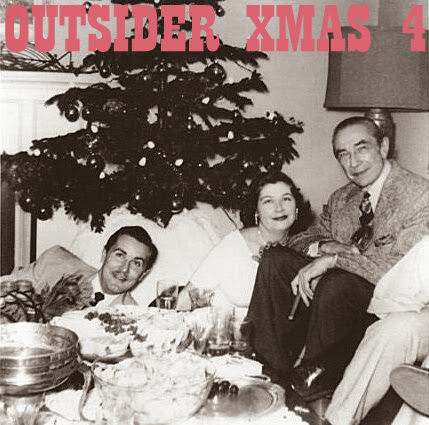
Outsider Holiday Music Again Again


I received a request to re-upload these compilations of unusual seasonal recodings (songpoems, celebrities, novelty, developmentally different, amateur, etc) again but it turns out some of the links are still live so I'll just repost those here..

"You may order your pastels from Alaska,
Imported, as the Igloo, in review"
- Evelyn Christmas (songpoem, Vol 2 track 4)

Download Outsider XMAS Vol 1
Download Outsider XMAS Vol 2

Tracklists in Comments


Images from Silent Night Deadly Night 5: The Toymaker

Wednesday, October 21, 2009

I Love You You Big Dummy


CCCP-SCC
The Coalition for Cinema Conservation and Preservation – Southern California Chapter

In conjunction with The Echo Park Film Center

Announces a one night only event – Friday October 30th 2009 at 8 PM

Uncanny My Ass: Penetrating the Performative Object

Join Hugo, Woody, Conky, Hugo, Chip, Marcy, and many others for a selection of found and recovered video and cinema featuring ventriloquist dummies, marionettes, sock-puppets, Resusci-Annie, crash test dummies, and anything else we can scare up.

Featuring special live IN PERSON appearances by Los Angeles artist, musician & filmmaker Marnie Weber (Party Boys, Spirit Girls) presenting her new short film “The Sea of Silence” and David Liebe Hart and His Puppet Friends (Junior Christian Science Bible Lesson Show; Tim and Eric Awesome Show, Great Job!) performing songs from a new original musical detailing the history of LA’s Pacific Electric Red Line!

The rest of the evening will be given over to a survey of ventriloquist dummies (and related simulacra) in popular culture, including excerpts from classic horror films “Dead of Night” and “Devil Doll” the “Conky” episode of Trailer Park Boys, and classic ventriloquist routines including a rare puppeteer-free video of Christian ventriloquy legend Little Marcy, and much more!

PLUS Legendary door prize raffles, Halloween refreshments, Surprise special guests and MORE!

The Echo Park Film Center
1200 N. Alvarado St
Los Angeles, CA 90026
(the blue building at the corner of Alvarado and Sunset)
phone 213 484-8846
www.echoparkfilmcenter.org

Friday October 30th 2009 at 8 PM

Sunday, October 18, 2009

For Those with a Jonestown Jones


No sooner had I put my audio sampler up on my under-construction website than I get an email from one Fielding M. McGehee III of The Jonestown Institute asking me about the track entitled Jonestown (white night/white noise mix) created primarily from electronically processed recordings of Rev Jim Jones. I had never heard of the Jonestown Institute, but tracked them down easily enough - it turns out "Mac" is the spouse of Rebecca Moore, whose two sisters - higher-ups in the Peoples Temple organization - died at Jonestown, and whose book Understanding Jonestown and Peoples Temple was published by Praeger in March.


Their website is a huge and remarkable resource of information about Jones, Jonestown, and Peoples Temple, and they were very involved with the excellent documentary "Jonestown - The Life & Death of Peoples Temple." So when Mac asked me to write a short blurb about the Jonestown (white night/white noise mix) track and for their annual online journal The Jonestown Report, I was flattered, and jumped at the chance. The piece was actually the soundtrack for a painting, as seen above, and one of many works that I've produced concerning the episode in Guyana. One of my early essays for Art issues. - entitled The Aesthetics of Paranoia - also dealt with the legacy of Jonestown, and conspiracy consciousness in general. The new edition of the Jonestown report is online now, and features an extensive section on the Peoples Temple LP He's Able. My short essay is here.

Thursday, October 15, 2009

"Thought Styling" and "Thought Stylist" are Registered Trademarks of the Buck Burns Center for Temporary Issues


"Even if you’ve heard of the Yes Men, “high profile” might seem a stretch for a pair of media hackers with a healthy Internet following and a moderately successful documentary to their names (or their pseudonyms). But just moments into their new film, The Yes Men Fix the World (previewing at the Hammer on October 21), you are jolted into a different perspective — as Yes Man Andy Bichlbaum nervously prepares to go live on BBC television in front of 300 million viewers, posing as a representative of Dow Chemicals, to announce long-overdue reparations to the victims of the Union Carbide disaster in Bhopal, India, in 1984. Within a couple hours, Dow’s stock value had plunged $2 billion.

Fix the World documents several more of the group’s two-pronged subterfuge — taking exploitative commodification to logical extremes, grisly (Vivoleum — a new energy source) or ridiculous (the Halliburton Survivaball, an inflatable disaster-survival suit resembling a bloated tick); or using their mistaken identities to demonstrate the concrete possibility that corporations can “Dow the right thing.” Which is, of course, an impossibility. No matter what the Supreme Court says, corporations are not people, and they don’t have consciences. Recent findings indicate that corporations are, in fact, a malevolent, parasitical, conceptual organism from a nearby star system, bent on the destruction of the human body, mind and spirit. The hapless primates that organize themselves into corporate enclaves are helpless pawns — if only corporations didn’t dangle such shiny things just out of our reach!

Beneath the hilarity and satirical incisiveness of the Yes Men’s antics lurks an awareness of this reality. Audience reaction shots focus on bored lackies breaking out in relieved, conspiratorial grins. By the time New Orleans mayor Ray Nagin responds to the Yes-Men-as-HUD with a rambling allegory about “a well-dressed lie chasing the naked truth,” it seems like everyone’s in on the gag — they just don’t know how to get out. The best art is always about dislocation, whether it’s a picture of a bison on the wall of a cave or an upside-down urinal rejected by an avowedly unjuried art show."

Read the rest of True Lies II: The Yes Men fix the world here.

The Yes Men Fix the World opens locally at the Laemmle Sunset 5 and Playhouse 7 on November 6

"Thought Styling" and "Thought Stylist" are Registered Trademarks of the Buck Burns Center for Temporary Issues

Wednesday, October 14, 2009

25 Minutes of Jim Pyke's Life He'll Never Get Back


I just ran across this flattering but inexplicable blog entry from last January, in which Jim Pyke of Ann Arbor reads my essay from the Gary Panter Picturebox book... aloud... in its entirety. The really unnerving thing is that this was Jim's last blog entry, after which pajkossy appears to have gone dormant. Welcome to the Mouth of Madness, Jim.

Tuesday, October 6, 2009

Bees in a Shop Vac


Bees in a Shop Vac, Bees in a Shop Vac, Bees in a Shop Vac, Right On!

Monday, October 5, 2009

There's Always Time for Jar Jar Binks


I should be writing, but you gotta prioritize and when its a question of sharing a poop-walk photo of a reflected shopping-cart dude as the aorta of Jar Jar Binks, I think we all know what goes on the back burner.

Saturday, October 3, 2009

South from Arcata with Bears & Fabio


Well, I thought I'd be blogging daily about the Stone Summer Theory Seminar, but there was no time, and then with the Viking wedding in Arcata and all and most of my pictures still on the laptop and back to teaching and art writing, you're all just going to have to wait to find out "What Do Artists Know?" In the meantime here are some shots from the roadtrip back from Arcata - about 14 hours straight.


Images: First five at Redcrest CA - Bear signage at Redcrest Redwood Gifts; Marnie Weber & Welcome Bear; Outside and inside the Eternal Tree House; Christian Cummings and Fabio, Apricot Tree Restaurant, Firebaugh CA

Sunday, September 20, 2009

Windy City Headtrip


So here I am in Chicago to participate as one of 15 "fellows" in the Stone Summer Theory Institute, an annual weeklong seminar led by Jim Elkins at the School of the Art Institute. Not my usual cup of fish, but this year's theme is "What Do Artists Know?" which more-or-less translates into "How can art be taught?" which has always been a thorn in my brain, but much more so since I started teaching intro studio painting at West LA College last year. Somehow I got stashed in the same SAIC condo where I stayed last time I visited - everyone else is in a hotel, so I figure its some kind of quarantine since I believe I'm the only non-career academic and self-identified artiste in the lot. That's the view from my 24th floor picture window, and this is my attempt to modify the early morning lighting situation. Eat your heart out Olafur Eliasson!


The actual wingding doesn't officially kick off until the morning (leaving me plenty of time to finish the 1500 pages of required readings!) but there was an introductory lecture and dinner. In between I bought some groceries, got caught in a rainstorm (Member those homies? No fear, El Nino's a-comin!) and wandered around the Art Institute taking pictures of artworks involving detached heads. My subconscious' way of gearing up for the colloquium I guess! More soon.


Images: Henri Leopold Lévy The Death of Orpheus c. 1870 (detail), Géricault Head of a Guillotined Man, 1818/19 Gustave Caillebotte Calf's Head and Ox Tongue c. 1882, Henry Fuseli Head of a Damned Soul from Dante's "Inferno" 1770/78, Guido Reni Salome with the Head of Saint John the Baptist c. 1639/42 (detail), Sky-Clad (Digambara) Jina Seated in Meditation (Dhyanamudra) India, Uttar Pradesh 10th/11th Century

Monday, September 14, 2009

The Groaning Metaphor


"Swinging by the Pasadena Museum of California Art is often like grazing some kind of far-fetched fusion buffet — blithely mixing collectible vinyl action figures with early California Impressionist landscape painting, wrapped in a custom rainbow fumigation tent with a side order of spray-painted Kenny Scharf legume entities. The gestalt isn’t always successful, but the unexpected shifts can deliver the effect of cleansing the mental palate, piquing your appetite for the next new sensation.

The current menu is particularly appetizing, sandwiching a combination of smooth midcentury modernist design and funky, quirky postmodernisms between two slices of contemporary landscape experiments. And, appropriately enough, the largest of these shows is devoted to dinnerware. Edith Heath (1911-2005) was a Danish farm girl from Iowa, who reinvented herself as one of the central figures of midcentury West Coast Modernist design, founding Heath Ceramics in 1947 with a mission to produce sturdy, functional and affordable ceramic products — primarily dishware and tiles — in a minimal, Bauhaus-derived vocabulary of clear, simplified geometry and cool, subtle colors. The company still manufactures out of Sausalito and maintains a store on Beverly Boulevard...


The remainder of the large main gallery is taken up by a small survey of work from a peculiar California art-historical moment — when the hippest campus in the state wasn’t CalArts or UCLA or SFAI or CCAC but UC Davis, located just west of Sacramento in the Culture-forsaken Central Valley, and known primarily as an agriculture and veterinary university. Somehow, Davis wound up home to five of the more idiosyncratic representational American artists of the 1960s...


Of the two landscape projects bracketing the Heath and “You See” exhibits, architectural photographer Benny Chan’s is the more formally elegant and serene — surprising, considering that “TRAFFIC!” consists of huge, incredibly detailed aerial depictions of gridlocked L.A. freeways shot with a purpose-built 8-by-10 camera while dangling from the side of a helicopter. I’m not convinced of the ostensible consciousness-raising purpose of the work (“Heavens, you mean rush-hour traffic in L.A. sucks?”) but the built-in compositional framework and undeniable curvilinear beauty of the interchanges paired with Chan’s technical prowess make a persuasive argument for getting your own helicopter.


PMCA’s front project room is given over to the latest version of “a never-ending painting in three dimensions” by young landscape artist (and L.A. Weekly Annual Biennial alumnus) Annie Lapin. Over the past few years, Lapin’s lushly painted montage vistas have been subjected to increasing amounts of stress, from barely discernible discontinuities in slightly quirky pastoral scenes to furious torrents of barely cohesive planar fragments rendered in garishly saturated colors..."

Read the rest of Heath Bars, Lapin And Mash: Fusion Cuisine in Pasadena here.

And see the shows at The Pasadena Museum of California Art, 490 E. Union St., Pasadena, through September 20.

Images: Edith Heath, Roy De Forest Every Trapper Should Have an Indian Dog (1960), Benny Chan TRAFFIC! (2008), Annie Lapin Parallel Deliria (Kansas City iteration) (2008)

Friday, September 11, 2009

Le Deluge


"September 11 is upon us, and we all know what that means — opening weekend for the new fall line of upscale home decorations! But, hey, given the profusion of cultural fanfare marking previous anniversaries of the whole chickens-coming-home-to-roost thing (and the brouhaha undoubtedly brewing in anticipation of the imminent 10-year milestone) it’s not surprising that the art world would want to back away from geopolitical topicalism in favor of a back-to-normal (a.k.a. “Daddy Obama will fix everything! Let’s go shopping!”) mode of discourse. Which is fine. Frankly, I would consider the most self-indulgently aesthetic self-expression more authentically political than most formulaic ideological illustrations. This weekend offers the gamut, in overwhelming abundance — here are a few of the highlights to help map out your gallery-hopping..."
Read the rest of Snips & Snails: Let the Fall Art Season Begin! here


[That originally read "Colored Daddy" - as opposed to (or rather, indistinguishable from) White Daddy or Girl Daddy - but saner minds prevailed.]

Images: Brian Bress A River; Doug Aitken migration; Constance Mallinson Couple; Daniel Hawkins Railroad; Charles Irvin Oannes

Monday, September 7, 2009

Less of a Chartres Vibe, More Like Feeding Frenzy


Well, that went pretty much according to plan, except for the 4-hour installation (it would have been longer - probably impossible - without the help of renaissance dude Michael Gomez-Burton who also shot some of these photos) and the fact that the piece wasn't as space-filling as I thought, and kept tearing, and partially collapsed before I got to the opening/happening. But since I didn't actually have a plan, it's safe to say it went "like clockwork". Here's a self-explanatory series of photos depicting the installation/performance/cleanup. Thanks to everyone who came, especially the 41 people who purchased a slice of history.


Wednesday, September 2, 2009

"Carving Up (and Passing Round) the Ruins of Abstract Painting"

St Sebastian Soylent Rainbow Labyrinth

For his third solo exhibition at POST (or P0ST), Doug Harvey will present a giant, two-sided interactive abstract painting on paper. Part of Harvey’s recent exploration of working with discarded, decaying, and purposely pre-rotted materials, the painting was executed using aged leftover paints, including latex mistints, curdled acrylics, oils gone wild, and mystery fluids found in unmarked cans and left to ferment for up to a decade. The paper is an entire roll of “seamless” photographic backdrop paper found on the street and left outside in the elements for the last 4 years.

Arranged in a clockwise spiral (in a balancing opposite rotation to the layout of his 1997 POST installation St. Sebastian Tom Sawyer Cathy Mishima Expo 67, the approximately 11 ½ X 64 ft St Sebastian Soylent Rainbow Labyrinth operates as a basic Chartres-like walk-through environment. Excised rectangular segments interrupt the stability of the visual continuum, and the excised portions are available for sale to the public at $5 per segment. In addition, visitors may excise any rectangular segment from the larger work for purchase. The artist will be present to sign any purchased segment. St Sebastian Soylent Rainbow Labyrinth was created specifically for this one-night exhibit, and any unsold portions will be destroyed at the end of the show.

One Night Only! Friday September 04, 2009 7 – 9 PM

Part of:
September Kamikaze Shows
Thirty Solo and Group Exhibits
Receptions: September 1 – 30, 7-9 PM, one each night

PØST
1904 East 7th Place
Los Angeles, CA 90021 USA
213 4881280
new@post-la.com
post-la.blogspot.com

Tuesday, September 1, 2009

Silent for Ever on the Grid Mass


I stumbled across a website featuring some of the poetry of my Great Uncle Joe - a dirt-poor French-Canadian farmer who self-published his work out of Bodmin, Saskatchewan - and ran it through the google translator. Here's a sample:

"I have since long years there in a secretary,
Among my memories a black sealed envelope;
He was sent to me by a summer night --
Echo of a long sigh as I would have been silenced.

It is there. No one ever will know the mystery.
I fuck sometimes, vaguely troubled.
I listen, my heart beats! It seems to me tinkle
As tinkles in the mist of a monastery bell ...

And suddenly sad, as remorseful
I say: Why bother? - Since the beautiful sleeping
Silent for ever on the grid mass

Do not speak the posthumous letter
Let sleeping peacefully in their dark room
And the lover and the ice love letter!"

J'adore les outils linguistiques de Google! Photo of LA burning by M.A. Peers, returning from Santa Barbara dogshow Sunday afternoon.

Monday, August 24, 2009

Puppy Fix


Ex-Westminster competitor and Auntie to Nigel Ch Winway Portofino Of Sportingfield had a litter of 9 (!) puppies 6 weeks back and we just got out to Dr. Suzy's for a look-see. Here are some pictures. I'm not sure which is which, but I think the one biting my toe is Fundog Millionaire.


Sunday, August 23, 2009

It’s a Crumby World...


The recent announcement that the Hammer Museum would be displaying the complete original pages of Robert Crumb's new adaptation of The Book of Genesis reminded me that I hadn't posted a link to this piece, which we rushed to press just in time for Comicon. Strangely, it's disappeared from the WEEKLY website, so I'll reprint it here in its entirety.

... But it Could Be Worse

Since 2005’s benchmark MOCA/Hammer “Masters of American Comics” exhibit, there has been a growing acceptance in the art world of graphic narrative as a legitimate medium – ranging from the industry-wide influx of young experimentalists from the Providence/Kramer’s Ergot axis to the belated recognition of neglected “masters” like Basil Wolverton, whose ultra-grotesque 50’s-era caricatures (among other, even stranger, works – like his hyper-rendered apocalyptic illustrations for Herbert W. Armstrong's Radio Church of God) are currently on view at NY’s prestigious Gladstone Gallery (Matthew Barney, Lari Pittman, Richard Prince) in an exhibit culled from the collection of local hardware magnate Glenn Bray by ex-pat LA artist Cameron Jamie.

Of course, Bray’s unparalleled collection was the basis for an earlier selection of Wolverton’s work exhibited in a slightly more off-Broadway venue – Santa Ana’s Grand Central Art Center to be exact. The GCAC’s 2007 “The Original Art of Basil Wolverton” (for which I wrote a catalog essay) was a typically idiosyncratic offering from this unique venue, whose 10-year exhibition history has blurred boundaries between high and lowbrow, insider and outsider, real and fake – with shows like Thomas Kinkade’s first ever museum survey (curated by Jeffrey Vallance) and “100 Artists See Satan.”


For their latest blur-job, the GCAC is hosting a traveling retrospective of an artist whom critic Robert Hughes has compared to Goya and designated “the Breugel of the 20th century.” Thanks to Terry Zwigoff’s 1995 documentary, Robert Crumb achieved a level of timeless mainstream branding that allowed him to transcend his association with Haight-Ashbury’s Summer of Love and become the default public stereotype for the “wacky underground comic artist” – though it’s hard to hold onto the claim to continued countercultural credibility when one’s deadpan adaptation of “The Book of Genesis” is heralded by a 12-page excerpt in The New Yorker (June 8).

Not that Crumb has anything left to prove – as the creator of the underground comics genre with his self-published Zap Comix (as well as his less celebrated 80’s zine Weirdo -- a crucial continuation of the underground tradition through the Reagan era) and with 17 volumes of collected work (plus 10 facsimile sketchbooks and innumerable anthologies, coffee-table tomes, collected letters, etc.) of his intricately rendered, old-timey-fetishism-meets-psychedelic-pornographic-class-rage narratives published by the amazing Seattle-based Fantagraphics, Crumb’s legacy is pretty much unassailable.


The question is, why would you go to a museum to see this work, when so much of it is so readily available in its intended mass-media format? Earlier incarnations of “R. Crumb's Underground” – organized by San Francisco’s Yerba Buena center for the Arts and curated by Todd Hignite (the man behind the sumptuous if sporadically available Comic Art Magazine) – sought to deflect this thorny question through the inclusion of giant blow-ups of Crumb characters, including the artist’s own “lifesize” sculptural rendition of his 80s erotic icon Devil Girl.

Although one of the most charming pieces in the GCAC’s reduced version of the show is sculptural – a collection of anthropomorphically doodled-upon wooden Spoolmen created in the last couple of years – Crumb’s world is fundamentally 2-dimensional, and the reasons for leaving the comfort of your armchair to visit it are also twofold. Firstly, there’s the lingering Benjamin-stylee aura of the handmade object, given additional layers of convolution through the lens of comic collector fetishism and the tremendous historical impact many of these drawings had when reproduced around the world.


Secondly – and most importantly – is the opportunity to make a close inspection of Crumb’s craft. The phenomenal fluency and graceful labor-intensity of his best work is unsurpassed in contemporary graphic arts, but this only becomes clear when you see the originals, and realize that this is actual ink put on actual paper – and there’s no Wite-out! Drawing almost entirely from a single collection, “R. Crumb's Underground” isn’t the quintessential museum show the artist deserves – maybe the Centre Georges Pompidou in Crumb’s adopted homeland will come through in that department – but it’s a strong representative sampling of his half-century oeuvre.

One anomalous oddity in the show is a video shot in the early 70s at one of the Zap comics collaborative drawing jams where most of the Zap comix crew (including a hot young Robert Williams), joined by Gilbert “Freak Brothers” Shelton are seen producing one of their stoner montages. About halfway through, they’re joined by a slightly older, relatively square-looking man who is greeted reverentially and invited into the mix. This is Harvey Kurtzman, probably the only person who could challenge Crumb’s claim as the father of underground comics.


While Zap was undeniably the first in a series of explosions that changed the world’s ideas about the possibilities of graphic narrative, the fuse had been lit a generation earlier, when Kurtzman – mastermind behind EC Comics’ now-legendary war titles Two Fisted Tales and Frontline Combat – pitched a satirical humor comic that became MAD. Under Kurtzman’s guidance between 1952 and 1956, MAD combined his own prodigious talents with those of Wally Wood, Will Elder, and Jack Davis to raise parody to a delirious new medium that generally surpassed the artfulness of its conventional mainstream targets.

MAD lit the fuse that reached critical mass with the underground comics phenomenon of the 60s and 70s (and can be reliably credited as the inspiration for Roger Ebert’s giddy postmodern scripts for Russ Meyer’s Up! and Beyond the Valley of the Dolls, amond other non-comic cultural milestones), but by the time of his death in 1993, Kurtzman was virtually unknown outside the world of comic fandom – and aficionados of Playboy’s “Little Annie Fanny” on which he’d –ahem—lavished his talents for the previous twenty-five years. This obscurity has been gradually subsiding since then, and has reached a new plateau with two recent publications. Though most of his MAD work has been readily available in some form of reprint since its original publication (most recently in two “Mad Archives” anthologies from DC) it was only recently that his subsequent publishing venture Humbug saw the reprint light of day – thanks again to Fantagraphics.


Kurtzman left MAD in a tussle for artistic control, pursuing Trump a glossy, deep-pocket dream gig for Hugh Hefner that tanked after two issues. His next brilliant career move was to start a more expensive, poorly printed B&W variation on the MAD formula, funded and published by a collective of fellow artists. Surprisingly, it actually lasted for 11 issues. Literate and subtle, yet still retaining passages of the claustrophobic associative horror vacuii of Kurtzman & Elder’s gag-clogged MAD panelage, Humbug is one of the great lost treasures of American humor, miraculously reissued in a high quality format unimaginable in its original pulp incarnation.

After the collapse of Humbug, Kurtzman spent a couple of years in freelance limbo, producing some of his most distinctively loopy solo work – a gorgeous beat adaptation of The Grasshopper and the Ant for Esquire, the first all-original graphic novel (Harvey Kurtzman’s Jungle Book – a complete flop), an epic unfinished reimagining of Dickens’ A Christmas Carol, and much more. These, along with samples spanning Kurtzman’s entire oeuvre, are represented in “The Art of Harvey Kurtzman: The Mad Genius of Comics” from Abrams.


This lavishly illustrated doorstop of a book -- compiled by underground artist/publisher Denis Kitchen and pop history prof Paul Buhle – covers several other lesser known periods of Kurtzman’s career, including his pre-EC comic work, and his final venture into magazines – the as-yet-unreprinted early 60s HELP!, cofounded by James “Famous Monsters of Filmland” Warren, and featuring the editorial talents of Gloria Steinem and Terry Gilliam, as well as featuring the first published work by several future underground comix stars – including R. Crumb, whom Kurtzman famously sent on a fact-finding mission to Bulgaria.


Sadly, the book’s subtitle is a bit of a misnomer, as Kurtzman’s career was largely defined by compromise in the interests of fiscal security, as epitomized by his lengthy tenure under Hef’s thumb churning out the slick, overdetermined “Fanny.” Kurtzman knew that his best work resulted from complete autonomy, but it was rarely an option. Maybe if he’d been born 10 years later and made the Zap scene as a player, things would have been different. Different, yeah – like there would have been no Zap scene, and there would have been no R. Crumb, and there would never have been a MAD Magazine – or a Beyond the Valley of the Dolls. That’s a world you don’t want to visit.

R. Crumb's Underground
closed Aug 16
Cal State Fullerton Grand Central Art Center
125 N. Broadway, Santa Ana, CA 92701-8237

The Art of Harvey Kurtzman: The Mad Genius of Comics
Denis Kitchen and Paul Buhle Introduction by Harry Shearer
Abrams ComicArts
ISBN: 0-8109-7296-4

Humbug
Harvey Kurtzman et al
Fantagraphics
ISBN: 156097933X

Tuesday, August 18, 2009

Bacharach, Jonestown, John Cage, Rasputin, & Music for Airedales


For those who want to verify the spuriousness of my claim to being an "experimental musician" I've just uploaded the individual tracks for the audio sampler created for last Fall's Untidy retrospective to my website in progress. Click here to visit the page. And thanks for listening.

Monday, August 17, 2009

Nigel's Recent Press Roundup


M.A. & Nigel are the subject of one of the first in a projected series of spotlight profiles by J. Gerard Schwerdt on the K9 Nose Work web page.

"When you mention the breed name “Whippet”, what usually comes to mind is a slender, athletic racing dog running around a track at speeds up to forty miles per hour, chasing a fast-moving artificial prey object. That life may have suited Nigel, a five-year old Whippet owned and handled by M.A. Peers. But for now he is content to be unique among dogs of his breed. According to M.A., “I know and compare notes with a number of people who do competitive dog sports with Whippets and Greyhounds. So far, I haven’t managed to convince any other sight hound people that this [sport] is great for our dogs. So Nigel is the only Whippet doing nose work that I know of.” Nigel’s slow, deliberate movement while searching for odor belies the fact that he was bred for speed, and lots of it, at a moment’s notice."

Continue reading about Nigel's Nosework triumphs here.

Saturday, August 15, 2009

General Monty's Campaign


MA's always complaining that I don't put up images of Portfolio in a correct show stack, so I finally got around to it. The trick is that is comes from the blog of one of Portfolio's colleagues, Monty (he's the other dog you can see through the metal whippet eye in the Lompoc entry below). You can visit his blog here to get a funny, finely documented account of the whippet campaign trail, the triumph of agony, etc. plus movies, more Portfolio (and nemesis Viggo!), Canine good Citizenship, and hand-knitted bamboo yarn baby kimonas! What are you waiting for?

Wednesday, August 12, 2009

Captain Eelbegone Serialized!


Just a heads up that my mid-90s superhero comic Captain Eelbegone in 'A Farewell to Eels' is now being serialized on the Blurred Books website.

Wednesday, August 5, 2009

North to Lompoc: No Pets/Yes Men


Fans of retired racing greyhound Al Gordon (RIP) will recall his Competition Obedience triumphs at the annual Combined Western Sighthound Specialties at Ryon Park in Lompoc, CA. This year we decided to run up the credit card so that Portfolio could kick some more Conformation butt, and so we could see 107 whippets in one place at the same time.


Portfolio was pulled out by the judge for a close comparison with his ongoing nemesis, the dreaded Viggo. It was clearly a difficult decision and, sadly, the judge went with conventional wisdom instead of deep intuition. Portfolio nevertheless got 2nd in his class of five dogs and won a delightful orange and lime-green horsey toy in addition to his ribbonage.


Its always an adventure visiting these off-the-beaten-path communities, but the weirdest moment came just after our arrival. We took a chance on visiting the show site around 10 PM - thinking the dogs could get a little run in after being cooped up in the rental SUV - and lucked out, finding we could set up our canopy, crates, etc, so we wouldn't have to do it in the morning. It must have been close to midnight when we finally got into the hotel room, and since our cable's been out for a few months, I figured I'd check out what was happening on Adult Swim.


Not much, as it turned out, but then I noticed the Lompoc City cable channel. I had heard about but never checked out the TV version of Democracy Now and the last place I expected to find it was on the civic booster station for a town where migrant workers pick flowers in the shadow of a Federal Penitentiary while prismatic rocket test trails spiral up from Vandenberg Air Force Base. But there it was. I flip the channel, and there are longtime Anti-Conformation activists The Yes Men, hawking their latest cinematic offering The Yes Men Fix the World. It was one of those moments that's so undigestibly WTF that it passes back into the foodchain intact and moves on. If I didn't have these pictures of Andy and Mike and Chloe and Portfolio I'd have thought I dreamed it.

Sunday, July 26, 2009

Introducing the Gout Thong!


By popular demand, and developed from a concept by activist/flautist Erik Knutzen, DougH on the Go in conjunction with CafePress is proud to present The Gout Thong - a New American Classic. Don't say we never did anything for you.

Saturday, July 25, 2009

Speak of the Devil!


Just after finishing the last post, the WEEKLY not only published my review of Feral house's Love Sex Fear Death: The Inside Story of the Process Church of the Final Judgment but bumped it up to 'Featured Story' status, which almost certainly means I'll be getting another check in the mail (joke). I don't know if I'll have time to compare and contrast versions, but I noticed one glitch in the official print & online version, where - in trying to parse one of my rambling convoluted sentences - some one upstairs misidentified the owner of "the point of view of an overworked acolyte" as Robert de Grimston (picture above) rather than author Timothy Wyllie. They also misplaced my hilarious "Process Cheese" title. So you're better off reading the version below, though please continue to patronize the call-girls, laser vaginal rejuvenators and compassionate dispensaries that are the WEEKLY's honored patrons. I know I will.

Tuesday, July 21, 2009

The Lost Chapter on the Process Church


This piece got bumped for space from the WEEKLY book issue, and is supposed to be printed any day in some form - it was online for a day, then vanished mysteriously! So in case it never surfaces, I present:

Process Cheese and How It Spread

Love Sex Fear Death
The Inside Story of The Process Church of the Final Judgment

by Timothy Wyllie
Edited by Adam Parfrey
304 pages • 7 x 10 • many color images • ISBN: 978-1932595376
Price: $24.95


"The Satanic Ritual Abuse (or SRA) conspiracy fad of the 1980s may have torn apart families, destroyed the lives of innumerable innocent people, and set the credibility of clinical psychology back at least 50 years -- but for fans of sleazy, poorly-researched exploitative true-crime books, it was a godsend. While cognoscenti hold a special place in their hearts for such early fabrications as Michelle Remembers and The Satan Seller, the piece de resistance of the genre was Maury Terry’s enthralling 640-page bestseller The Ultimate Evil, which attributed the Manson, Zodiac, and Son of Sam murders to a global satanic underground masterminded by a sinister cult known as The Process Church of the Final Judgment, led by the shadowy and charismatic Robert de Grimston, who had disappeared from public view in the early 70s.

The only problem was that, by the time Terry’s 1987 magnum opus briefly rekindled the flames of the dwindling SRA media frenzy, de Grimston had reverted to his birth name of Robert Moor and was working an office day job in Staten Island, while the Process Church itself – from which he’d long been excommunicated – had morphed into the Best Friends Animal Sanctuary in Kanab, Utah, the largest no-kill animal shelter in America. Somewhere between these mundane and sensationalist extremes lay the truth about the Process Church and its role in the cultural upheavals in the 60s, but reliable accounts were fragmentary and scattered.

Enter Adam Parfrey and Genesis P. Orridge. Originally teaming up to issue a facsimile collection of the Process’ strikingly designed apocalyptically-charged magazines (which remain highly sought-after collectors items), the Feral House publisher and Throbbing Gristle/Temple of Psychic Youth founder quickly realized that a number of Process insiders were prepared to go on the record about their years with the controversial sect. The result is Love Sex Fear Death: The Inside Story of the Process Church of the Final Judgment – titled after, and reproducing some pages from the group’s glossy underground zine – but dominated by 120 pages of autobiographical reminiscences by Timothy Wyllie AKA Father Micah AKA Mithra AKA Father Jesse, one of the original inner circle that founded the group in London in the early 60s.

Wyllie was friends with former public-school boy and British Army officer DeGrimston (then Moor) at architecture school but had lost contact for a couple of years when, in 1963, he got a call out of the blue. Robert and his new wife Mary Anne had decided to leave Scientology and develop their own program of psychological and spiritual development, based on the use of an e-meter and self-examination in an intensive interview scenario. In the course of his reminiscences, Wyllie reveals what has been rumored for some time – that Robert DeGrimston was more or less a dummy figurehead for the megalomaniacal schemings of Mary Anne.

Mary Anne MacLean had experienced a childhood defined by poverty and neglect in Glasgow before becoming a high-end prostitute in London, supposedly hooking up with Sugar Ray Robinson for a time, before recognizing that her particular talents could be put to more lucrative effect in other areas. As the DeGrimstons’ “Compulsions Analysis” sessions began attracting more and more disaffected proto-hippy types, the group began having remarkable spiritual experiences, and began suspecting that they were not only on the cutting edge of experiential psychological research, but were in fact a chosen spiritual elite ordained to herald the end times.

According to Terry and his ilk, what followed was a rapidly expanding, systematic program of ritual sacrifice and atonal music, designed to precipitate the apocalypse through the summoning of a Celtic death god named Samhain. Wyllie’s account is somewhat more prosaic and farcical, following the Process Church’s random global peregrinations, incoherent channeled theology (which gave equal billing to Satan, Lucifer, Christ and Jehovah) and increasingly totalitarian bureaucratic hierarchy from the point of view of an overworked acolyte who believed he was being guided along a path of spiritual evolution by an incarnate Goddess, or at least a secret Sufi master.

While there are plenty of juicy bits – your flagellation, your sex orgies, your celebrity cameos (yelled at by Klaus Kinski and Miles Davis! Who’da thunk?) – most of the anecdotes in Love Sex Fear Death (abetted by numerous shorter reminiscences and period documents) are sordid in a less titillating sense, as a gradual unraveling of a seemingly sincere moment of collective inspiration into all-too-familiar routines of coercion and greed, charting Wyllie’s inevitable disillusionment with and departure from the New Religion he had helped invent and define. It is a patently un-glamorous saga of indentured panhandling, dumpster-diving, child neglect, public-access proseletysing, and Heathers-level Machiavellianism – detailing the insidious banality of evil more convincingly than Process theology or Maury Terry ever could.

Robert DeGrimston was forced out by Mary Anne in 1974, and after unsuccessfully trying to start a Process revival, gave up and got a real job. Mary Anne kept revising and renaming the group, gradually removing all references to Satan and Lucifer before realizing that it was easier to persuade the rubes to part with their hard-earned jack for the protection of poor little defenseless animals than to facilitate the immanentization of the eschaton. Ultra-ironically, Wyllie recounts a rumor that her death in 2005 was the result of an attack by feral dogs who’d broken out of their “sanctuary.” Who says Jehovah doesn’t have a sense of humor?"

Sunday, July 19, 2009

About the Gout


After regular periodic mentions on this blog, many readers sometimes ask: What is the Gout and what does it look like? I have included the above psychedelic landscape of the joint above my right big toe, taken in the third week of my recent attack (after it migrated from my left knee), and refer you otherwise to the Wikipedia article, which begins:

"Gout is a disease hallmarked by elevated levels of uric acid in the bloodstream. In this condition, crystals of monosodium urate (MSU) or uric acid are deposited on the articular cartilage of joints, tendons, and surrounding tissues. It is marked by transient painful attacks of acute arthritis initiated by crystallization of urates within and about the joints and eventually leads to chronic gouty arthritis and the deposition of masses of urates in joints and other sites, creating tophi. Gout results from a combination of prolonged elevation of uric acid and overall acidity in the bloodstream. In isolation, neither elevated uric acid nor acidity is sufficient to cause gout. Historically, it was known as the "The Disease of Kings" or "Rich man's disease".

The Wikipedia entry also reproduces this excellent 1799 etching by British caricaturist James Gillray who was afflicted by the condition and died in mental hospital after an unsuccessful suicide attempt:

Wednesday, July 15, 2009

Over Sideways Down Under Painting


"In Australia in 1971, a 30-year-old white Sydney schoolteacher named Geoff Bardon took a posting in the Aboriginal-relocation community of Papunya in the outback west of Alice Springs, teaching art to the children of the patchwork indigenous community. When he began to encourage them to paint the traditional patterns they habitually traced in the sand — instead of the westernized cowboy-and-Indian scenarios that were expected of them — he inadvertently triggered one of the most remarkable artistic events of the 20th century. The Western Desert Art Movement began as a sudden outpouring of traditional visual material by dirt-poor male Aboriginal elders in this unlikely remote location, and has basically continued unabated, while expanding into a successful multibillion-dollar niche of the international art market and a major source of economic support, cultural pride and political empowerment for the indigenous Australian people."


"Less than two years after arriving in Papunya, having broken under the pressure of racist individuals and institutions that wanted to stick to helping the natives with the tried-and-true strategies of incremental genocide, a.k.a. assimilation (and Johnny-on-the-spot carpetbaggers eager to cheat the artists out of even the relative pittances their canvases fetched in those early days), Bardon fled the settlement in the middle of the night, and unwittingly committed himself into the hands of notorious psychiatrist Harry Bailey, whose MK-ULTRA-style “treatments” consisted of lengthy induced barbiturate comas spiked with massive electroshocks — sometimes on a daily basis and often unauthorized. Twenty-six people died while under his care, and many others — Bardon included — were left permanently disabled. Continual pressure from dissatisfied customers, activists (including Scientology!) and journalists finally got Bailey’s “deep-sleep therapy” clinic shut down, and Bailey killed himself in 1985 in the face of a government investigation."


"This peculiar and tragic story of almost accidental inspiration and martyrdom lies uneasily at the center of the history of contemporary Australian Aboriginal painting, so it’s appropriate that a short documentary on Bardon’s Papunya experience — 2004’s Mr. Patterns, --directed by Catriona McKenzie — runs, like an anomalous apparition from another world, looped on a monitor in the middle of the UCLA Fowler Museum’s two concurrent exhibits of Western Desert Painting. Which is an interesting inversion, since the paintings themselves are, more or less, portals to another dimension."

Read the rest of Outback Renaissance here

Visit the official website for the Icons of the Desert exhibit here.

See Icons of the Desert and Innovations in Western Desert Painting 1972-1999 at the UCLA Fowler Museum through August 2

Images top to bottom: Johnny Warangkula Tjupurrula Water Dreaming at Kalipinypa, Tim Leura Tjapaltjarri Yam Spirit Dreaming, Mick Namararri Tjapaltjarri Big Cave Dreaming with Ceremonial Object, all works 1972, Collection of John and Barbara Wilkerson, Photos by Tony De Camillo

Thursday, July 2, 2009

North, to Victorian Ferndale, and Partway Back


I've been weirdly crippled for the last 2 weeks from what I believe is a new left knee-centric manifestation of The Gout. In spite of this, we succeeded in making the journey north to the Humboldt County Fairgrounds in beautiful Victorian Ferndale for the Lost Coast Kennel Club's annual 2-day show. I managed to get a good deal on an SUV rental with Priceline, but when we got around to looking for shelter, we found ourselves looking at $120 plus $20 per dog (X3!) per night, until I discovered the peculiar world of KOA Kampgrounds -- a family-oriented franchise chain noted for its miniature golf facilities and standardized faux rustic Kamping Kabins. 


A weird thing happened on Thursday as we were driving to Burbank Airport to pick up the rental SUV -- we were stuck in unusually heavy traffic around noon on the I-5, listening to a mix CD I made and the demo version of the Jacksons' "Shake Your Body" came on and I said "Michael Jackson" and M.A. said "Michael Jackson's causing this traffic jam? What did he do?" That got me thinking what a sad weird life he had, then when we got home it turned out he had just died. Mere coincidence?


As we headed north, we kept using dog-travel resource fieldbooks to try to locate dog-friendly facilities where three whippets could cut loose with impunity, but kept getting lost. Finally we gave up, and would just bail off the freeway on the outskirts of Bakersfield or wherever, and within minutes were able to locate an empty fenced-off soccer field or playground. This may just testify to the relative plenitude of public space (particularly the un-padlocked variety) outside of LA, but the whole trip was sort of infused with an improvisational grace.


We drove straight through, something like 12 hours. The last part was really David Lynchian, winding through the redwoods with almost no traffic, brights on, sinuous lines of reflector traffic beads pulsing like a Bridget Riley animation, occasional giant trees jutting into the road, or a sudden panoramic array of brightly colored chainsaw-carved cartoon figures emerging from the void, only to be swallowed back again immediately. Good thing I only ate half that brownie! We arrived at the KOA Kampground at 3 or so, found our Kabin and let the dogs romp silently in the standard K-9 Kompound, all of which are equipped with dwarf agility equipment. Here is a detail of the sun-blasted bulletin board adjoining the men's restroom which I discovered in the morning after a few hours shut-eye:


We backtracked a few miles from Eureka to Ferndale and found the Fairgrounds where the dog show was happening. Portfolio did very well on Saturday, winning his first Best of Breed and thereby earning the first point toward his Championship. I got a chance to explore the Fairgrounds and take some pictures, then the whippets practiced their Nosework before they all got their first experience of lure coursing -- a sport where a plastic bag (or something) is dragged around a field in an elaborate pattern very quickly, simulating a bunny running away. Nigel tried a racetrack version a year or so back, and just didn't get it, but he was right on top of the motherfucker this time. Portfolio also did well, and Chloe delivered a breakout performance complete with head-over-heels tumble into the finish line. 

We crashed briefly back at the Kampground, then no-sleep addled, decided to check out the Samoan Peninsula. We didn't have the time to check out their famous Historic Samoa Cookhouse - the last surviving lumber camp-style cookhouse in the West, built in 1893 - but the dog guide lady guided us true in that the place is surrounded by amazing deserted beaches, and the dogs went crazy again. As the sun sank into the Pacific, Chloe posed for her upcoming solo acoustic torch song album cover, and they almost met a seal.


On Sunday Portfolio won 1st in his Class of one, but didn't receive any further accolades, but we had to stick around for the raffle as there was a heavy clear Lucite silhouette of a doberman - a used trophy in fact - up for grabs, and I wanted it for a friend. I didn't win it, but I did come away with a new waterproof overcoat for Chloe. We finally hit the road but realized another 12 hour marathon was out of the question, and since I had had to book the SUV through Monday, the only question was where to stop. We did take a detour to drive thru the Chandelier Drive-Thru Tree in Leggett - Chloe found her passage blocked in the nearby non-drive-thru (but taggable) tree. Also pictured, the sun-blasted KOA Eureka men's restroom bulletin board version of the attraction:


After a doggie break in Santa Rosa I had a brainwave and pulled over into a strip mall Starbucks to try and get online. The Starbucks was closed, but their wi-fi was up and I learned they have a proprietary deal with ATT, and wanted $3.99 to log on. Fuck that. Driving around the parking lot, I picked up another signal, and thanks to Safeway.com I was able to find and book a KOA Kabin in Petaluma, just north of San Francisco. An altogether more gentrified Kampground, where - strangely, for the most wired city in the world - I couldn't get online at all - probably due to all the regular American families managing their facebook accounts, playing WOW and DLing porn in the wilderness LOL.


In the morning we decided to take the #1 highway down past Big Sur - something we've wanted to do for 20 years and never got around to. We stopped by in Santa Cruz for a Falafel at the place by the Casino (!) and I took a picture of the back of this beat camper with some kind of pink petroglyph blankie in the window. Santa Cruz. We wound through the clouds on down the coast, stopping to capture images of the whippets mimicking the pose struck by a Hollywood shiksa seconds earlier (scrreee! Shoot me Daddy! click. VROOM!) Anyway, I realized that the reason I never got around to making the trip before was that I subconsciously realized if I ever did I would immediately want to give it all up and live naked in a treehouse on the grounds of the Esalen Institute. Which is where I am now. Thank god they have wi-fi!

Thursday, June 18, 2009

Hi Good Free in Torrance Friday!


As part of the new programming at the Torrance Art Museum, Los Angeles based artist/curator/critic Doug Harvey has selected Lee Lynch's film titled "Ned's Draw" -- a neo-revisionist True Crime Western -- as the inaugural installment of the TAM's new film series. The film will be supplemented with live acting and an installation. 
Doug has also selected a new short by Eric Wright & Cathy Ward titled "Passing" which is narrated by LM Kit Carson who wrote Paris, Texas.

Los Angeles artists Gustavo Herrera & Spencer Douglass will kick off the evening with their piece "Buffalo Mierda".

Friday, June 19, 2009
8:00pm
Torrance Art Museum
3320 Civic Center Dr.
Torrance, CA
90509

MAP

Monday, June 15, 2009

GLOW Girls à Go-Go in the OC!


"The impression most people have of the history and meaning of 20th-century abstract painting basically involves a bunch of can-do postwar East Coast American dudes systematically stripping away subjective frills such as “content” to arrive at the monochromatic squares and precise geometric diagrams of Minimalism and Conceptualism, which allegedly refer to nothing outside themselves.


I’m not sure if any of the actual artists in question would subscribe to this version of history, but it has nonetheless seeped into the surface levels of our collective cultural consciousness, effectively burying a deeper and more complex story — a story less about real men optimizing the efficiency of the decoration industry and more about a bunch of middle-aged ladies wandering the desert in search of transcendental light.


However glossed over in the interests of secular technophilia, this alternate account of the significance of capital-A Abstraction keeps bubbling up, most elegantly in 2005’s 3 x Abstraction: New Methods of Drawing by Hilma af Klint, Emma Kunz and Agnes Martin (possibly the best show ever hosted by the Santa Monica Museum of Art) but perhaps most emphatically in LACMA’s 1986 exhibit (and exhaustive catalog) The Spiritual in Art: Abstract Painting 1890-1985. Aside from af Klint, one of my personal revelations from that show was local mystic Agnes Pelton, who spent her most productive years in Palm Springs–adjacent Cathedral City, painting luminous, symmetrical conflations of the natural and inner landscapes that teeter between geometric decoration and symbolic illustration; between sumptuous formal design and painting deployed as a tool for entering (and prompting) altered states of consciousness.


After experiencing the disproportionate presence manifested by Pelton’s Sandstorm (1932) in LACMA’s sprawling, cluttered millennial Made in California extravaganza — the modestly scaled but optically riveting oil painting actually caught and held my attention from across the vast museum lobby — I became a little obsessed. Pelton, born in 1881, had quintessentially beat-bohemian credentials. Though born into money, her maternal grandfather — journalist Theodore Tilton — had struck a major blow to American sexual Puritanism by suing his friend Congregationalist minister Henry Ward Beecher, an abolitionist but vocal opponent of the “Free Love” movement, for adultery with his wife. The resultant front-page trial did considerable damage to Beecher’s reputation (and the political credibility of overt sexual repression), and drove Tilton into exile in a Parisian boarding house, where he supported himself by writing poetry. That was the mother’s side. Pelton’s father, a globetrotting bipolar Louisiana sugar heir, OD’d on morphine when Agnes was 9."

Read the rest of Luminous Dames: Georgia, Agnes, Agnes, & Florence at OCMA here


See the show through Sept 6th at the Orange County Museum of Art.

Images all Agnes Pelton; top to bottom: White Fire (c. 1930), The Voice (1930), Light Center (1960-61), Sand Storm (1932)

Monday, June 8, 2009

A Sense of Entitlement


All Hail Sporting Fields' Nigel, NW1! Nigel is the first whippet to have earned the Nosework 1 title, though doubtless many will follow his lead. Always a trailblazer, Nigel was among the first group of pet dogs to pursue this new field of competitive canine sport, which evolved from drug and bomb sniffing training and involves locating arbitrarily scented cotton swabs hidden variously on a vehicle, in a room, in an exterior space, and in one of a series of boxes.You can learn more about Nosework classes and competitions at www.funnosework.com

Above: Nigel nails the exterior search. It was in the watering can.
Below: Nigel with his ribbon.

Sunday, June 7, 2009

Precious Ruins


"Those familiar with Steve Canaday’s work from back around the turn of the millennium will recognize this move as a periodic return to the abstract roots from which his lurid imagery blossomed — a consolidation of the lessons gleaned from immersion in skanky figuration. And a rich, black volcanic compost it yields indeed. Consisting of a half-dozen medium-size shaped canvases embossed with coarse monochromatic black-on-black grids of rectangles in high relief, like buttons on a metastasizing cell phone, the tread of a shredded monster truck tire, or an aerial map of a charred cityscape — Canaday’s Black, Blacker, Blackest suite possesses a physicality and gravitas only hinted at in his earlier work.

Highlighted with satellite night vision–green patches and halos, constructed in vague resemblance to automotive fragments, and occasionally sprouting an antenna from a top stretcher bar, these cartoonishly postindustrial geometric abstractions flirt with figuration just enough to spoil their reading as doctrinaire Minimalism, while retaining their prerogative as remarkably decorative objects. Call it Late American Imperial — sumptuous and unique material commodities that seem to embody a stripped-down symbolic divination of their host culture’s impending demise — the last feeble flickering of the fluorescent-green ghost before it becomes all machine, the last sputtering transmission from VALIS to penetrate the Black Iron Prison.


But maybe I’m projecting. There’s a strong temptation to look for signs and portents of impending collapse in the artifacts of a doomed culture, even in the midst of seemingly perpetual supremacy. Of course, this works even better in hindsight, which accounts to some extent for the ongoing public fascination with the excavated detritus of the city of Pompeii. While undeniably constituting one of the most remarkable archeological treasure troves ever dug up, the flash-fried ruins of this first-century Neapolitan resort town have elicited a perverse and subjective fascination from the modern Western imagination since their rediscovery in the mid-18th century.

As a story, it’s pretty much got everything — sex, death, explosions, pathos and a surprising amount of humor. I get a sense that the city’s excavation created a McCluhanesque media shift in our perception and processing of (at least) antiquities — after all, Pompeii and its neighboring cities constitute a sort of holographic virtual-reality snapshot of a 2000-year-old culture — a century before photography began to condition our perceptual models to accommodate such frozen sensory data. This sudden holistic shift had a profound effect on archeology, art history and museology, but also sent shock waves through our species’ common cultural and sensory software."

Read the rest of Apocalypse Now & Then here.

Friday, May 29, 2009

Fuck the Bamboo Ceiling!


Yes! Congratulations to Shirley Tse, 2009 Guggenheim Fellow. Shirley's latest cluster of poly-everything sculptures can be seen at Barnsdall (4800 Hollywood Blvd 90027) in the 2009 COLA Prizes show, through July 12, 2009 -- for which I wrote the attached essay.

“Just one word: Plastics.” This pithy line, the straw that breaks Benjamin Braddock’s antidisestablishmentarian back in the enormously popular 1967 film The Graduate, encapsulates a remarkably pervasive archetypal association between synthetic polymers and a wide range of (mostly negative) social, political, and even spiritual conditions.  Dating back at least to the beatnik era - and continuing as a current running through subsequent cultural moments right up to the present – plastic has been a word, an idea, and a material inextricably commingled with notions of inauthenticity, alienation, superficiality, disposability, waste – indeed, virtually all the perceived negative changes wrought upon our species’ 10,000 years of relative agrarian stability by the Industrial Revolution. Polyester doesn’t breathe!

One of the first things that struck me as remarkable about Shirley Tse’s sculptures – after their initial and persistent formal impact - was their function as indicators of a deeper and more complex understanding of this human/plastic relationship – encompassing and acknowledging plastic’s pop-humanist demonization as an important but reductivist aspect of a much larger, finely nuanced, multi-layered and multivalent narrative.

One aspect of this underlying narrative has been an engagement with the history of plastic in art, most conspicuous in Tse’s avoidance of the kinds of plausibly deniable irony that characterize Pop usages of this most modern of materials – as well as the mute fetishism of its Minimalist incarnations. But Tse has cast a much wider net. Before even leaving grad school she had identified the circulating global stream of cheap plastic consumer goods – in which both Los Angeles and the artist’s hometown of Hong Kong act as major hubs – as a central underlying motif in her work’s formal and conceptual gestation.

The geopolitical and systems theory implications arising from this specific template are extensive, yet only hint at the mycelium of interlaced ideational threads underlying the mandala of synthetic ‘shrooms that comprise Tse’s oeuvre. Through intentional research and reference as well as unusually lucid intuitive and associative connections, Tse has imbued work that reads at first glance as playful but enigmatic formalism  - brightly colored inflatables, intricately incised slabs of foam, mutated beverage coolers - with the distinctive sense of elaborately interwoven symbolic sets lying just outside our comprehension, elaborately modeled entry points for a vast interdimensional metro system (if only public art looked half as good!)”

Read the catalog version of here

Or the slightly longer original version in Comments.

Monday, May 25, 2009

Gristle for DeMille


"Throbbing Gristle’s ties to California are deep. The last time they played L.A. was May 1981 — their first-ever gig in the U.S. and their penultimate gig before dissolving the band for more than two decades. But they had, in fact, made quite a “splash” in the L.A. art community several years earlier. In fall 1976 Cosey and P-Orridge appeared as COUM at the experimentally minded artist-run space LAICA, just weeks after having caused a media frenzy in the U.K. tabloids with a state-sponsored gallery exhibit, including used tampons and framed porn-magazine spreads featuring Cosey — a feminist Situationist intervention and welcome source of income

Their L.A. performance of “Cease to Exist No. 4” (named after a Charles Manson composition recorded by roommate Dennis Wilson’s band, the Beach Boys) is local legend. As P-Orridge later recounted, the event was dripping with integrity — as in the sequence where he “takes a hypodermic and stabs it into a testicle, fills it with blood, picks a black egg off thee floor, stabs thee syringe into it ... injecting a total of seven black eggs with his own blood.” P-Orridge later “pisses into a large glass. As he squeezes out the last drop, he farts, and blood mingled with milk shoots out of his arse.”

From this unholy exchange of fluids (and we’re only scratching the surface here, people) were birthed the persona of Marilyn Manson and the cinema of David Lynch, among other important cultural treasures — not to mention electronica, acid house, Survivalist Chic, the Lounge Revival and about three-quarters of the inventory at Hot Topic. Thanks, Throbbing Gristle! Seriously, though, David Lynch rules. I often think of Lynch as an artist who has managed to deal convincingly and creatively with the exigencies of commercial success. Like TG."

Read the rest of Throbbing Gristle's 33rd Annual Report here.

I'm still a little bummed that I didn't get to catch them in the act - no way Coachella, and I was teaching the night they played the live ST to Derek Jarman's Shadow of the Sun at the Ricardo Montalban Theater. But hey, next time, right?

Wednesday, May 20, 2009

Satan is the Source, of Course of Course


I put this up on Facebook (please explain) for GG2 but it got crunched to unintelligible by some robot. So hopefully if you click on the above image you will be able to read, and learn, and avoid, and live, and move on, my dear friends. Leave comments if you want to learn more from (Doug Harvey's World of) Fascinating People.

Wednesday, May 13, 2009

On the Road to Westminster


Wow, I've been slackin' with the posts. Teaching, writing, car trouble, plumbing issues, and particularly Portfolio's burgeoning Conformation show career have been eating up the "spare" time. I also started reading novels again. More on that later, but first a couple of shots from the Rio Hondo Kennel Club All Breed Show at Cal Poly Pomona a couple of weekends ago. Above: Portfolio relaxing in the Zone before nailing #2 in a class of 2 (puppies 6 - 9 months). Below: (l-r) Portfolio & Chloe's littermates Phoebe Couture and Diesel, elder siblings Darren and Harmony, who are being handled by the inimitable Valerie Nunes-Atkinson. Throbbing Gristle and more soon!


Wednesday, April 29, 2009

All well and good, but where's Margaret Keane?


I have a Big-Eye painting in this crazy omnibus show at the Green Gallery in Milwaukee that Kristin Calabrese and Josh Aster put together - all the pieces had to be 11 X 11 or smaller. I realized mine was oversized so I sawed it down and folded it over, securing with monofilament. I forgot to take a picture but here is a surveillance style-rendering enhanced from the official group photo on Facebook. It's part of the Pre-rotted series, and called Processional Mecca. The show's called "Lovable Like Orphaned Kitties and Bastard Children" and opens May 9th.

Sunday, April 12, 2009

Video Art Out of Africa


"A couple of weeks ago, the eminent journal Science announced the confirmation of the earliest known human footprints heretofore discovered. Preserved between layers of volcanic ash, the 1.5-million-year-old tracks were shown by laser-scanning analysis to have been made by truly upright citizens (not like those knuckle-dragging Australopitheci).

It should come as no surprise that the footprints were found in East Africa, in the country now known as Kenya; the same neck of the woods where Mitochondrial Eve — the original common female ancestor of every human alive today — is thought to have trod some 150,000 years back.

And it was just a little farther down the coast, in Blombos Cave on the Southern Cape coast of South Africa, that archaeologists in the early 1990s discovered two ochre engraved plaques that had been inscribed with abstract geometric designs approximately 75,000 years ago — predating the cave paintings at Lascaux by a healthy 60 millennia: arguably our species’ oldest objets d’art.

Now let’s look at the headlines ... hmmm ... “Kenyan Police Accused of Widespread Killings” ... “15,000 Flee Southern Darfur” ... “President of Guinea-Bissau Assassinated” ... “Zimbabwe Cholera Epidemic Worsening. ... ”

Seeded with land mines, depleted of natural resources, riddled with plague, political corruption, poverty and starvation; her social structures pulverized to a jittery, explosive subatomic mush, awash in imported toxic waste, homogenized global urban culture and IMF debt, Africa is as much our future as it is our past.


The curators at the Fowler Museum know this — at least it seems so, going by their track record, with shows like 2003’s “A Saint in the City: Sufi Arts of Urban Senegal,” which traced the proliferation and mutation of a single image of Sufi saint Amadou Bamba across almost every surface of Dakar, and last year’s “Inscribing Meaning: Writing and Graphic Systems in African Art” — far and away the most compelling recent L.A. exhibit on the relationship between language and art. Both epitomize the Fowler’s ongoing commitment to representing the artistic practices of the non-Anglo world, Africa in particular, in all their complex vitality: balanced between ancient local traditions, contemporary international Art World strategies, and coping mechanisms for the coming apocalypse.

Of course, in the short term, it is the middle ground that is of greatest interest to the artists, curators and other players engaged in the effort to shift some capital away from Damien Hirst, Richard Prince and (South African–born) Marlene Dumas and into the grass-roots art economies of Dakar, Johannesburg and Lagos — or at least generate some art stars to compete on Charles Saatchi’s playing field."

Images: Muxima Alfredo Jaar 2005

Read the rest of Digital Roots: Continental Rifts at Fowler Museum here

And here's the Fowler's webpage about the shows.

Wednesday, April 8, 2009

None of the Above


"Toward the end of Membrane Lane, Charles Irvin’s faux conspiracy documentary on the False Memory Syndrome Foundation (an organization that champions people claiming to have been falsely accused of child sexual abuse), there’s a particularly startling non sequitur. In the midst of the relatively straightforward montage of appropriated news footage and sequences in which the camo fatigues–sporting narrator/artist explains his conspiratorial flow charts, there is a jump cut to a strangely familiar image, which takes a second to place — a shot of the “foaming brush” in one of those DIY car washes, leaning upright against the generic tile wall, oozing globs of white soap. Then, just as you realize the footage is reversed, and the brush is sucking the foam up from the gutter back into its infinite milky reservoir, the rebunking of the Satanic abuse debunkers continues, leaving you with that distinctive “Wait! What the fuck was that, and how did it get in here?” sensation.


This sort of conceptual embolism seems to be the curatorial premise of Nine Lives: Visionary Artists from L.A., the current museum omnibus exhibit where Irvin’s DayGlo-primitivist cartoon paintings — and video — can currently be experienced. Nine Lives is something of a curatorial coming-out party for Hammer adjunct curator Ali Subotnick, whose genealogy as co-founder/director of prank Chelsea nonspace Wrong Gallery and occasional high-end journal Charley (both in collaboration with fellow critic/curator Massimiliano Gioni and eminent Vaffanculist Maurizio Cattelan) should have pushed her to the front of the schedule of exhibitions a couple years ago.


Tellingly, Nine Lives is more reminiscent of one of these prior joint efforts than it is of the Hammer’s string of previous regional survey shows (Snapshot, Thing, East of Eden) with which it is publicly equated. The most recent Charley (No. 5) is a treasure chest of idiosyncratic visual genius (if not the corresponding data — none of the artworks is dated or identified, and most of the essays are cribbed from Wikipedia), compiling the work of diverse outsiders like Jess, Noah Purifoy, Ree Morton, Forrest Bess, Christopher Knowles and more than 100 other remarkable figures from the margins of the contemporary art-historical canon.


Nine Lives shifts the focus to living artists working in Los Angeles but keeps the quirk factor — and its attendant awkwardness in terms of art-world acceptability — cranked to 11. Foremost among these are two of L.A.’s elder statesmen of quirk: Llyn Foulkes and Jeffrey Vallance. Foulkes is a remarkable painter, whose half-century of work seamlessly integrates Abstract Expressionism, West Coast Assemblage and Pop alongside his darkly personal political ruminations and signature obsession with exaggerated pictorial relief effects, with his carved-out Disney figures and post-Apocalyptic landscapes verging on the dimensionality of dioramas. Great as it is to see such a stellar selection of his work in one place (particularly his epic The Last Frontier, last seen briefly in the back of Patty Faure’s gallery), one hopes it doesn’t function in lieu of the overdue full retrospective Foulkes and the L.A. art community deserve."


Read the rest of Peripheral Visions: Nine of L.A.’S Square Pegs Get Hammered here.

Images:
Lisa Anne Auerbach Never Forget (front) 2007
Victoria Reynolds Flight of the Reindeer 2003
Charles Irvin Untitled 2008
Llyn Foulkes Deliverance 2007 (This piece was supposed to be in Some Paintings, BTW)
Lisa Anne Auerbach Never Forget (back) 2007

Tuesday, March 31, 2009

It's Like a Bathtub in Here


I seem to remember taking some photos at Lee's screening, but I'm pretty sure this wasn't one of them. I'll get around to that later - I just wanted to direct your attention to this outstanding recent experimental graphic narrative on John Higham's blog. Not Obscure is always worth checking out for John's richly rewarding take on life on earth (particularly in a tiny Inuit village in Nunavut), but once in a while he drops one of his mind-bending art or literary gems in the mix, adding a whole other dimension. Case in point being The Adventures of Jack in Dreamland. "Enjoy"

Wednesday, March 25, 2009

Towards a Hier Good


"Click image to enlarge"

Thursday, March 26, 2009
6:00pm - 11:00pm
Screenings at 6, 7:30, & 9
Gayle & Ed Roski MFA Gallery
Graduate Fine Arts Building (IFT)
3001 S. Flower St.
Los Angeles, CA 90007
(Entrance on 30th St. between Flower St. and Figueroa St.)

Monday, March 23, 2009

Hi Good is Coming Down Fast


Thursday night marks the debut screenings of Lee Lynch's new film project (and one night only thesis exhibit for his MFA candidacy at USC) "Ned's Draw or the Murder of Hi Good" screening at 6, 7:30, and 9 PM at the USC Roski Graduate Fine Arts Gallery, 3001 South Flower (just east of Figueroa) LA 9007. Followers of this blog will be aware of my lengthy involvement with this project - in fact my very first posting relates to it. I was on the shoot in January, up near Chico, and got hundreds of documentary photos plus 12 hours of 'making of' video footage. Here's a handful. I'll try and post another selection over the next day or two.


Friday, March 20, 2009

I Was a Twentysomething Painting Pachyderm


Here's something from 1987 or so that I thought was lost in the mists of time (AKA the molds of the garden shed) but turned up during research for my forthcoming website www.dougharvey.la

I've always been fond of elephants, but I forgot how far back my interest in them as visual artists went. For the LA Weekly's 2003 List Issue I wrote:

"Sometime in the early '80s, a Syracuse zookeeper named David Gucwa gave a paintbrush to the African elephant Siri and a new branch of non-human art history was born. A few years later, Ruby, an elephant at the Phoenix zoo, became a media sensation with her prodigious output of vibrant works. Realizing the fund-raising potential, zoos across America began shelling out for art supplies. Russian artists Komar and Melamid were inspired to open a school for unemployed Thai elephants to learn painting — a story outlined in their 2000 book When Elephants Paint. These sarcastic foreigners have more than a little invested in ridiculing Modernism, but the good their patronage has done is undeniable — sanctuaries in Thailand, India and Bali now support themselves with work by dozens of elephant artists sold through online galleries at www.soarts.com and www.novica.com. The Balinese sanctuary has been suffering the tourist gap since those discos blew up, and may be assisted directly at baliadventuretours.com. Look for the link to the Have-a-Art Appeal."

Read the rest of Doug Harvey's Favorite Non-Human Artwork here. Those links may be obsolete, but a good place to start looking is www.elephantart.com

Sunday, March 15, 2009

The Things in the Kitchen


Things have been pretty hectic what with the puppies and teaching a painting class and disposing of all my old art but I should plug this since I'm in it: L.A. collectors Sirje and Michael Gold have curated the art auction segment of the annual fundraising event WIDE ANGLE for the University Art Museum at Cal State Long Beach, pairing "thirty established artists with thirty artists whose works have been less accessible for Southern California audiences". I'm the latter, paired with Roger Herman. For my piece, I actually took Roger's woodcut kitchen image, flipped it horizontal, and then found all the entities hiding in his composition. There was a preview (and the silent auction of some paired works began) on March 12th at the SmogShoppe in Culver City, but the live auction itself is at the UAM (CSULB, 1250 Bellflower Boulevard, Long Beach, CA 90840-8401) on the 21st in conjunction with a Salle/Armitage shindig. The art will be viewable at the UAM from March 18th through the 20th from 12 to 5 PM. More info here. Above: Kitchen Below: Chien TK (Dog is Coming)


Bonus Art Tip: Chloe actually ate the buff titanium oilstick I used on my painting, and I called the ASPCA poison hotline, and they said that it was OK, and it was.

Sunday, March 8, 2009

S'more Paintings


There's been a recent surge of shows by painters who were included in last January's Third Annual LA Weekly Biennial: Some Paintings, and I was hoping to write a roundup piece for the Weekly. Unfortunately, scheduling it was too much of a nightmare, so I'll just use this forum to alert the world to the following current, upcoming, and missed opportunities to catch up on the LA painting scene. Above, Chloe experiences a Dutcherific thought bubble embolism at LAVC's Intuitive Eye: The Diana Zlotnick Collection, which also includes this c. 1960 work by mysterious SP participant Michael Oledart, as well as pieces by Adrian de la Pena, Llyn Foulkes, and Michael Arata.


Mark Dutcher's work is also the subject of a typically spectacular solo show called Havilah at Steve Turner Gallery through March 21. Below: Total Eclipse, 2009


Brad Eberhard's solo debut As Different as Twins is up under the auspices of Thomas Solomon Gallery at Cottage Home through March 14th. Below: Sir Gawain and the Green Knight, 2009


Tomory Dodge's latest ACME show After Forever is also up through the 14th. Below: Stars, 2009 


Llyn Foulkes, Charles Irvin, and Victoria Reynolds are all featured in Ali Subotnick's Nine Lives: Visionary Artists from LA exhibit at the Hammer Museum, up through May 31. Foulkes: The Lost Frontier, 1997-2005; Irvin: Untitled, 2008; Reynolds: Flight of the Reindeer, 2003


There's also a bunch of shows that have come down, but can still be digi-seen online, including Esther Pearl Watson at Billy Shire, John Kilduff at Jancar, Lisa Adams at Lawrence Asher, Monique Prieto at ACME, Michael Arata at Woodbury University, Constance Mallinson at Angles, David Korty at Michael Kohn, and Kaz Oshiro at Rosamund Felsen. You can understand how I had a little trouble getting organazized! And I'm sure there's a couple I've forgotten - I thought I saw something about an Annie Lapin installation in Pasadena, but it ain't googlin'.

Oh well. Watson: Washing My Hair in the Tub, 2008; Kilduff, Internet TV Collaboration #5, 2008; Adams: After the Deluge, 2008; Prieto: Tomorrow Morning, 2008; Arata: Nigel negotiating Obstacle Course, 2008; Mallinson: Decaying Olympia, 2008; Korty: Untitled (Magazine Stand), 2008; Oshiro: Untitled corner Piece (Turquoise), 2008.


Friday, February 27, 2009

Deutschland Deutschland


"I wonder what Syd Barrett was doing on July 21, 1990, whilst his former Pink Floyd bandmate Roger Waters was cranking the bombast to 11 in Berlin by supersizing that already bloated paean to bilious self-pity known as The Wall and conflating it with the decommissioning — six months prior — of the “anti-Fascist protective rampart” that had divided the German capital and stood as a symbol of Yankee/Soviet stalemate for the previous quarter century. Probably painting.

After his death in 2006, it was revealed that Syd had spent much of his three-decade withdrawal from show business making art, which he sometimes photographed before painting over or destroying. The question that nags me is this: Which is the greater creative act, micromanaging a spectacular but rehashed postmodern Gesamtkunstwerk for half a million people (and millions more via live satellite TV — and all ostensibly for charity!), or daubing away in a Cambridge cellar on a canvas that will probably never see the light of day?


What brings this to mind is Art of Two Germanys: Cold War Cultures, an ambitious and treasure-laden exhibit now happily displacing Damien Hirst (among others) from the second floor of LACMA’s BCAM building. It isn’t just the superficial Berlin Wall reference that summons the mighty Floyd, but the jostling polarities at play, that between hubristic historical importance and unrecorded humility as artistic motivators, and of the almost cosmic narrative of good and evil that drove Cold War politics — and tried to oblige Art into choosing a side.


Completing curator Stephanie Barron’s exceptional historical trilogy that began with 1991’s Degenerate Art: The Fate of the Avant-Garde in Nazi Germany and continued with ’97’s Exiles and Emigres: The Flight of European Artists from Hitler, Two Germanys adheres to this übernarrative closely, albeit in a subtly nuanced and richly detailed way. Beginning with Richard Peter Sr.’s claustrophobic, horizonless documentary photographs of the charred rubble (and citizens) of Dresden, the exhibit winds in a chronological circuit through the schizophrenic era of reconstruction toward the conceptual terminus of reunification. Shell-shocked attempts to assimilate the recent carnage with the tools of Modernism provide the first of many painterly gems, with the luminous biomorphic abstractions of Willi Baumeister, who chose to remain in Third Reich Germany, working in secret after being classified as degenerate.


The bifurcating streams of Communist Party–sanctioned Socialist Realism and laissez faire expressions of the Westside “economic miracle” afford glimpses into summarily disparaged modes of narrative figuration and prescient op/kinetic gizmoism respectively, while the first stirrings of anticonsumerist skepticism that blossomed in the “Capitalist Realism” of Gerhard Richter and Sigmar Polke are traced to the 1950s typewriter and sewing-machine portraits of Konrad Klapheck. A tableful of Dresdenite Herman Glöckner’s constructivist models — assembled in secret from tiny bits of trash to evade the disapproving eye of the East German Socialist Unity Party — provides a hauntingly poetic riposte to both official programs of aesthetic progress, while looking eerily contemporary — like something from last month’s grad-school open studios."

Read the rest of Divided We Stand: Art of Two Germanys here

Images:
Roger (Syd) Barrett Untitled, 1963, Pencil and oil on board (not in the show, Dummkopf!)
Willi Baumeister Gravour Faust – Scherzo, 1952, Oil and pencil on cardboard (also not in the show, but one I particularly like)
Various models by Herman Glöckner, c. 1960
Sigmar Polke, Object Kartoffelhaus (Potato House Object), 1967

Monday, February 23, 2009

Give Me Equulibrium or Give Me Horse Tranquilizers


If anyone's in the vicinity of the City of Brea, or passing through, this is the last week to check out Out of School, a show that gathers together a disparate group of works created by people who teach in SoCal art schools - including myself, Caroline Clerc, Roger Herman, Linda Day, and many others. My piece is a combination of two previously exhibited horse head sculptures, both of which will be entering private collections after this show. L: Precious Nuggets: St. Sebastian Annie Edson Taylor Queen of the Night, 2007 R: St. Sebastian Ann Coulter Daniel Radcliffe Mandelbrot Set, 2008

The City of Brea Gallery is located in the Brea Civic & Cultural Center at 1 Civic Center Circle, Plaza Level. Gallery hours are Wednesday - Sunday, 12 to 5 p.m., closed Monday, Tuesday and holidays. Admission is $2 and Brea residents are free.

Wednesday, February 18, 2009

Zlotnickmania 2-Nite!


Tonight is the opening of Intuitive Eye - LA Valley College's show of works from Diana Zlotnick's collection, which includes some of my work. I'll also be participating in the panel discussion. LAVC is just at the intersection of the 110 and 134 freeways.

Dennis Reed writes "A nonlinear thinker, Diana does not progress logically in even steps from one thing to the next. Rather she leaps, propelled by her inventive intuition and instinct. They have served her well. She has built a unique and enviable collection that includes early works by important artists: Andy Warhol, George Herms, Wallace Berman, and Richard Pettibone, to name but a few.

Her engagement with art is passionate and engulfing. Although she buys art from galleries, she prefers a more direct link to artists. She focuses on those whose careers are just emerging. She often visits their studios and befriends them, being among the first to buy their work. I have heard artists comment, years later, that Diana provided badly needed money and encouragement to continue working when they most needed it.

When she brings home new art, it is not placed carefully over the couch - I don't think she even owns a couch! The rooms in her house, even the bathrooms, are small exhibition spaces with rotating shows. New purchases join older works, so that a newly made piece, the paint barely dry, might hang next to vintage works acquired long ago by now veteran artists such as Andy Warhol, Edward Kienholz, or Lynn Foukles. She has been collecting since 1954, after all, when one of her first acquisitions was a John Altoon painting purchased from Walter Hopps at the now legendary Ferus Gallery. The work in this exhibition is but a small sampling of her extensive holdings."

Reception & Discussion with the Collector
7 pm, Wednesday, February 18, 2009

February 18 - March 26, 2009
Monday through Thursday
11 am until 2 pm and 6 pm until 9 pm


Images: Above: Don Bachardy, Portrait of Diana, 1982, acrylic on paper; Below:Doug Harvey, Precious Nuggets: The Happy Place, 2007, Mixed Media on found foam (Photo by Josh White)

Monday, February 16, 2009

Puppy Excursions


At the moment, Chloe's enrolled in a class which requires submission of weekly photodocumentation of her ongoing integration into the larger human social world. Above we see her shopping in For Pets Only on Hilhurst, sporting her newly purchased ultra-attractive pink raincoat - just too short enough! Portfolio, whose testosterone levels continue to surge to new heights on a daily basis, prefers more rugged leisure activities, as evidenced by this snap of him on a recent whitewater rafting trip to Arizona. Next port: Westminster!

Thursday, February 12, 2009

Splitting at the Seems


Tonight, Thursday Feb 12th, is the night for LA's monthly Downtown Art Walk which this time includes the closing reception for Larry Pearsall's Beneath the Seam at the Downtown Art Center Gallery from 6 - 9 PM.

"There’s an abandoned warehouse near the heart of Ice Dirt Town, where a bald, bearded and extremely tall pedophile named Bon lords over a harem of barely teenage boys — Lapito, Alex, Day Day, Billy, Ralph, Kevin; amputees Earl (left arm), Fakebein (right arm) and Marleytom (right leg), and about a dozen others. The boys don’t seem to realize they’re being abused. In fact, the few times we see them out of their ubiquitous denim overalls — being tickled or posing for a snapshot — they remain chastely clad in shorts and socks. But the cats see all. The Applebaycats, led by Blato, creep through the broken heating ducts of the abandoned warehouse: observing, commenting and envisioning a better time. A time beyond Bon.

This is the underlying scenario for one of the most compelling exhibits of narrative-based art in recent memory, a tour de force titled “Beneath the Seams,” currently on view at the recently opened DAC Gallery on Main Street at the edge of downtown’s gallery row. Artist Larry Pearsall is soft-spoken but happy to talk about his work and the avowedly fictional world it depicts. “The cats can’t do much. Except this one called the police on Bon. He was the last one to call the police, and that’s when the police came,” recounts the artist. “Bon goes to jail. Him and Molly and Brures. And they were after Balisha and her boyfriend, Reggie.” Balisha leads a contingent of slightly older, mostly African-American teens, who seem to sometimes provide the boys’ escape from Bon’s predations — and sometimes participate in them.


It’s hard to get a clear picture about the exact chain of events, or the specific roles each character plays, because Pearsall unfolds his story in discrete achronological fragments: single-frame tableaux rendered in a flat, jagged cartoon style as acrylic paintings on paper or canvas (as well as sculptures not included in this show) that jump discontinuously between settings, times and characters. Moreover, the almost 100 works included in “Beneath the Seams” are only a fraction of the completed chapters comprising a complex epic that shows no indication of reaching completion anytime soon. Which is probably why writer/director/producer Obie Scott Wade thinks Pearsall’s work is perfect for an Adult Swim–style animated series.


“I fell in love with the notion of animating Larry’s brilliant work because he paints as if God were holding a gun to his head and he cannot tell a lie,” asserts Wade, whose résumé includes Baby Looney Tunes and a transgender version of Shazam!, called Shezow. Citing Persepolis and Waltz With Bashir, Wade believes that “if handled properly, animation is the perfect medium to deal with hypersensitive subject matter. Larry is painting a singular universe populated with fully realized characters dealing with some very grimy issues.”

Read the rest of On the Seamy Side: Larry Pearsall's Avant-Garde Graphic Narrative here

Friday, February 6, 2009

Retroactive Puppy Cuteness Megadose

Sorry for the lack of posts, been too busy battening down the hatches (it's actually raining in LA) and getting rid of art. I'll try and knock out some quick mostly photo posts to catch y'all up on important developments hereabouts. First things first, for those with a Portfolio jones, here are two shots from the cover photo shoot for his forthcoming psychedelic solo LP "Is This Real Life? Why Is This Happening to Me? Is This Gonna Be Forever?" (I also just realized that Portfolio could be seen to be inside the blue cylinder in my recent Mad Gregs post. What does this mean?) plus an array of attractive combinations of Nigel, Chloe, Portfolio, and various soft pieces of furniture. But let's start with Chloe's courageous expedition to the bowels of Baller Hardware, and the strange creatures she encountered there...


Whippet Good!

Wednesday, January 28, 2009

Have a Hangover


Actually the flu, and also swamped with puppies, fingerprinting, collapsing sheds, economies, and civilizations, and other distractions. Its all documented and coming here soon, but in the meantime here's my most recent LA Weekly column, on the Brewery Project wrap party...

"It’s hard to imagine this late in the game, but only a few years ago, it was possible for an enterprising and ambitious member of the art-world cognoscenti to open these storefront showrooms — known as “galleries” — to which middle-to-upper-class consumers would come and acquire decorative artifacts with their “disposable income.” Since those halcyon days, the art market has pretty much retracted into its shell, leaving only a slimy residue to mark its decade of giddy self-congratulations, and a vacuum of both qualitative (ka-ching!) criteria and exhibition opportunities.


But culture abhors a vacuum, and despite the fact that this may well be the end of The Art World as we know it, it behooves us to consider the legacy of an artist-run project space that sprang up the last time the beaux arts economy tanked. The At the Brewery Project (or AtBP) ran more or less continuously from 1997 to 2007 in the titular Lincoln Heights art colony (formerly the Pabst plant), shepherded by artist/organizer John O’Brien. Technically speaking, that specific decade coincided with the recent boom years, but the roots of AtBP lie in several of O’Brien’s earlier collaborative exhibition series created in direct response to the bottomed-out art economy of the early ’90s.

As much as the art community bemoans these periodic downturns and disparages the “myth” linking creativity and poverty, it’s an undeniable fact that when commercial enterprises and bureaucracies drop out of the picture, artists have to become more inventive and improvisational if they want to share their work with the world. L.A.’s underdocumented history of artist-run spaces didn’t begin in the ’90s, but that period saw an enormous proliferation of such venues, ranging from garages in Echo Park and Pasadena bungalows to commandeered suites of motel rooms and guerrilla shows in abandoned industrial spaces.

AtBP, which mounted more than 50 artist-curated shows in the course of its existence, is in many ways an exemplary model for such grass-roots enterprises, and “At the Brewery Project, 1993-2007: The Finale” — the sprawling, piecemeal self-homage currently occupying most of Pasadena’s Armory Center for the Arts — wisely forgoes an encyclopedic historical overview (although the accompanying catalog and Web site, www.atthebreweryproject.com, provide considerable chronological detail) in favor of a grand extravaganza in the spirit of the original premise."

Read the rest of Last Round: At The Brewery Project: The Finale here.

Pictured above: Rebecca Ripple's me please me (2008)

Sunday, January 18, 2009

Too Much Viagra


Purse Launch's orgone seems to be all backed up in this still from the highly good new video for Safe in Sound, everybody's favorite song off the Mad Gregs' debut album Big Nun. Happily the Reichian therapist in the adjacent seat seems to be preparing to help alleviate PL's discomfort, ensuring a harmonic climax of whirlies in the end.

Friday, January 16, 2009

Art Go Boom! Ominous, Ominous.


Goddammit! My book shed has started collapsing. I guess it was only a matter of time. But my God, there's catalogs everywhere! Maybe its a suggestion that I significantly accelerate my de-cluttering agenda. Don't know how much blogging I'll get around to doing in the next few days, but hold tight - I have some wicked cute puppy pictures, a new piece in the Weekly, and a wealth of images and anecdotes from the recent Hi Good shoot - coming soon to this URL.

Friday, January 9, 2009

Dirty Dirty Ho Ho Ho


"The old elf has surfaced often in McCarthy's oeuvre, from the outrageous fecal-smearing bacchanalia of the mid-'90s Tokyo Santa (1996) and Santa Chocolate Shop (1997), to an entire series of recent sculptural works based on a Santa figure holding aloft a tree-like butt plug. This latter series culminated in Chocolate Santa (2007), McCarthy's warped take on entrepreneurship in the form of a fully functioning "Chocolate Santa with Butt Plug" factory, churning out $100 gift boxes at a rate of 1,000 a day in New York's Maccarone Gallery.

"I did the whole thing in two months," recalls McCarthy with disbelief. After refitting the gallery so that it passed the Board of Health, he made the mold, found a chocolatier, set up a company, and found people who "knew how to make this stuff." Then, he says, "I hired an ad agency and put ads in Vanity Fair and other magazines." McCarthy laughs. "It looked like success, but I always thought it would be a company that would fail financially — and it did. There was this thing in Artforum about how much money I was going to make and how I had sold out. They calculated that I was going to sell 30,000." He ended up selling around 1,600. "I have about 12,000 in storage, packed in shredded Artforums."

Around the same time, McCarthy turned his venture-capital attention to an even larger yuletide commercial failure. "Last year I tried to buy a Santa's Village by Lake Arrowhead," he says. The dilapidated village — part of a '50s-era franchise of Santa theme parks in California and Chicago — opened in the mountains just outside LA in 1955, six weeks before nearby Disneyland opened its doors. "I was planning on just treating it as a sculpture," McCarthy says. "I had plans for making films there, then operating parts of it." Although he did sneak in to take photographs, the project was never realized."


Read the rest of Santa's Little Helper (I just realized MP had put it online!) here.

Just got back from a week up near Chico on the Hi Good shoot. More to follow!

Wednesday, December 31, 2008

Give the Pouple What They Want


Recent polling efforts suggest that people prefer cute puppy pictures to bitter addled art criticism, so in the interests of capitulating to the lowest common denominator, I herewith proffer these two photographs: Above: first shot of Portfolio, flanked by Diesel and Phoebe Couture. Below, Portfolio attempts the Whippet Power salute in mid-gallop. Behind him, L-R are Chloe, harbinger of Death (note the scythe-like ear, and the "go into the light" effect), Diesel and Phoebe Couture. These photos were taken at Dr. Suzy's Whippet Emporium on Nov 4th.

Monday, December 29, 2008

Most Whatever of Whenever


"I have to start this listmaking thing by putting aside a few categories. First, the favorite things I’ve already written about this year for L.A. Weekly – The Center for Land Use Interpretation’s “A Trip to the Dump” bus tour; Martin Kersels’ “Heavyweight Champion” at Santa Monica Museum; Amanda Ross-Ho’s “Half of What I Say Is Meaningless” at Cherry and Martin; China Adams’ “Flights of Fancy” at Steve Turner; Peter Saul’s OCMA retrospective; Kippenberger’s “Problem Perspective” and “Allen Kaprow” at MOCA; “California Video” at the Getty, and so on (at this point I don’t want to look at art, let alone write about it, unless it rocks my world).


There’s also the favorite things I can’t write about – M.A. Peers at Rosamund Felsen Gallery because I’m hitched to the artist; the Third Annual LA Weekly Biennial “Some Paintings” at Track 16 and “Aspects of Mel’s Hole: Artists Respond to a Paranormal Land Event Occurring in Radiospace” at Grand Central Art Center because I curated them; Scotty Vera’s “Eat This” at Track 16 because I hooked it up; “Untidy: The Worlds of Doug Harvey” at Los Angeles Valley College because I was the subject – just being honest here; one as aesthetically evolved as myself must operate from a place beyond both false modesty and false pride alike, and anyone who says they aren’t more interested in their own work than that of others is either feeble-minded or unfit for their job.

What’s left is a mishmash of shows I’d like to have written about, books and other pop media artifacts, and other remarkable stuff that fell through the cracks.


Jeffrey Vallance’s awe-inspiring Track 16 installation honoring the 30th anniversary of the interment of grocery store–bought Blinky the Friendly Hen at the Los Angeles Pet Cemetery. The “life-size” Blinky Chapel contained dozens of artifacts from a replica fryer lying in state to elaborate reliquaries featuring bone fragments from the 1988 exhumation and forensic analysis of Blinky’s remains. Even a bad joke becomes transcendent if you keep telling it long enough, and Blinky was no bad joke. Snag the limited-edition catalog reprint, bumper sticker and Frisbee — a sound investment in these spiritually shaky times."

Read the rest of Mixed Media 2008 (except for that second paragraph) here.

Pictured: David McDonald's UN 2008; Scottie Vera's Autobody Experience 2007; Jeffrey Vallance's Blinky Trifecta 2008

Wednesday, December 24, 2008

Shawsaulbrown Sausage


"Curating isn’t always as easy as it looks. It’s rare to find a group of concurrent solo projects that genuinely complement one another — just because two artists happen to use images of trees or refer to cartography or have Photoshop doesn’t necessarily mean their work will have anything more than a superficial verbal resemblance. Museums regularly stumble over this sort of literalism in spite of their long-term scheduling and art-historical resources, and commercial gallerists — with their relatively fast turnover and propensity for attention-grabbing sound bites — are particularly prone.


Which is why, when a triple whammy like the current lineup at Patrick Painter crops up, it’s worth looking a little deeper. On the surface, Jim Shaw, Peter Saul and Glenn Brown seem like an almost arbitrary selection from the gallery’s stable — artists from three distinct generations, two of whom work at opposite ends of the U.S., while the third hails from another continent altogether. L.A.-based Shaw works promiscuously across the media spectrum, from highly rendered figuration to abstract video, while recently ensconced Manhattanite Saul is strictly a painter’s painter. Londoner Brown is also an old-school painter as far as materials go, but his near-obsessive appropriationism (which landed him in legal hot water with one of the science-fiction illustrators from whom he cribbed) lies at the opposite pole from Saul’s seething pop expressionism.


Maybe appropriation is the key? “That’s not really a factor with Peter,” says Shaw, whose own works are frequently chock-a-block with obscure pop-culture references, “and I’m not exactly an appropriator in the way that Jeff Koons or Glenn are. I do occasionally utilize something that somebody else did. But not in a direct way where the appropriation is important to it. For example, I’m thinking of taking pictures of children similar to the ones in these Christian calendars — often I’ll set up a photograph that looks similar to the preexisting things that inspire me, which is a somewhat different action from Glenn.”

Read the rest of Agree to Dis here.

Images: Untitled Scribble (Magician); Wooden Heart; Real Estate Agent Going Crazy - all works 2008

See the shows at Patrick Painter through Jan 10.

Thursday, December 18, 2008

A Sudden Flurry of Whippets


Apart from disassembling my show and keeping up with writing chores and waterproofing my outdoor stashes of raw Flash Fudd materials, things have been extra hectic due to the recent addition of two 12-week-old whippet puppies to our household. The whole litter turned out to be fluish and unable to keep food down, so we had to spend Monday night at Dr Suzy's nursing them back to health. Pictured are Portfolio's star turn at the All-whippet Mini-Westminster; Chloe with a biscuit (or piece of a tree or something); Nigel and Portfolio in a tableau of now-unlikely intimacy; Chloe - and then Portfolio and Chloe - this afternoon checking out the Mayberry schoolyard. Chloe's a chick with one disqualifying blue eye, Portfolio's a dude who likes to wear Chloe's pink sweater, and we support him in his lifestyle decision.


Sunday, December 14, 2008

A New Spin on an Old Chestnut


I had to buy a memory card reader to finally get my video of Nic Waterman's l'il gig at the Echo Curio off my Canon Powershot, onto the computer, and finally up on youtube. But given the seasonal nature of this song -- his creepy detournee of 'My Favorite Things' performed in October at Echo Curio (partly in response to seeing 'St. Sebastian Doubting Thomas Singing Nun' - my own creepy detournee of 'My Favorite Things' included in my retrospective at LAVC- video TK), it had to be done.

Monday, December 8, 2008

Outsider Holiday Music Again


I had a request elsewhere to re-upload these compilations of unusual seasonal recodings (songpoems, celebrities, novelty, developmentally different, amateur, etc) so I thought I'd offer them here as well.

"You may order your pastels from Alaska,
Imported, as the Igloo, in review"
- Evelyn Christmas (songpoem, Vol 2 track 4)

Download Outsider XMAS Vol 1
Download Outsider XMAS Vol 2

Tracklists in Comments

As my invitation to the LA WEEKLY 30th anniversary festivities on Saturday night seems to have been lost in the mail, I wound up attending the much more exclusive Dr. Suzy All-Whippet Mini-Westminster in Agoura Hills (pictures to follow) with MA & Nige. Stopping by Echo Park on the way home, we ran across the above (from across the lake) and below (creeping up on them) depicted cluster of ragged Cacophonic Santas, the dregs of what I understand to have been a jolly debauch. Ah, 90's nostalgia. One angry, pink mohawked S'antirchrist took offense to me taking their picture, demanding "Who are you with?!" "It's OK," I said. "I'm with Nigel."

Thursday, November 27, 2008

Dogs & Boy by Train to SF


I think this was in Merced.

Wednesday, November 19, 2008

Weird Hours and Moldy Slides


My solo retrospective, Untidy: The Worlds of Doug Harvey, closes next Wednesday, Nov 26th, just in time for Thanksgiving! However, many who have sought to amplify their imminent feelings of gratitude with an actual physical encounter with my parallel oeuvres have been frustrated by their assumption that the LAVC gallery operates on a typical gallery schedule. It does not. For starters it is NOT open Saturdays. Or Fridays. And Monday through Thursday they have the unusual schedule of being open between 11 AM and 2 PM, then closing until 6 PM, then reopening until 9 PM. So that's Monday - Thursday 11-2 & 6 - 9.


In related news, we've finally managed to book the LAVC art history lecture room for a screening of moldy slides, examples of which are included above and below. I've been showing a selection of these around for a few years, but I recently began working on Rhizomatic Transmission - a completely new show, which was debuted at the Museum of Jurassic Technology with a live soundtrack by Mannlicher Carcano. I recorded the improvised soundtrack and borrowed the MJT's remarkable Bell & Howell Tandem-Matic slide projector, and now that we have the room booked we're good to go!

The slides were recovered about 5 years ago from a dumpster-bound pile outside the house of our local crazy hoarder dude who had apparently suffered an intervention of some sort, as bin after bin of moldering bric-a-brac kept finding its way to the curb over a period of months. I was able to resist the broken lamps and deflated soccer balls, but when several cardboard boxes filled with 35mm vacation slides (apparently originally acquired somewhere else - crazy hoarder dude wasn't actually in any of the pictures) I ceased to resist.

After discovering the remarkable visual properties of the disintegrating emulsion, I sorted the plain from the fungal, then washed and dried about 1000 mold-altered images, and began organizing them by relative fabulousness and pictorial intelligibility (notice the car in the lower right corner of the top image? My favorite.) The result was very satisfying - a stochastically linked collaboration between the original vacation photographer, crazy hoarder dude, the mold, and me - plus the found and improvised soundtrack elements.


Rhizomatic Transmission will be projected on Tuesday November 25th at 8 PM in Room 103 of the Art Building at Los Angeles Valley College, located near the corner of Fulton Ave and Oxnard Rd, at the NW corner of the LAVC campus. The gallery will be open between 6 and 9.

Monday, November 17, 2008

Heavy Rotations

"The first body of work presented in detail here actually takes a step back from the uncanny allegorical puppetry in favor of a cooler and more art historically–precise exploration of physicality. In his photodocumentation of various acts of tripping, falling, smacking, tossing and spinning — probably his best-known work — Kersels lays out an incremental, encyclopedic examination of the paradox of performance art’s cultural afterlife in the form of reproductions in magazines and books.


It is in this once-removed form that an aspiring performance artist comes to know the lineage of their chosen medium. Kersels’ decisive-moment framing of his staged traumas dovetails neatly with Performance’s wryly self-reflexive engagement with its own compromised evidence trail, particularly through his UCLA mentor Paul McCarthy’s 1968 action Leap, a re-creation of Leap into the Void (French trickster Yves Klein’s notorious 1960 purported self-defenestration whose documentation turned out to be a faked photograph) which, at the time of his performance, McCarthy had never even seen.


Added to this house of mirrors, Kersels’ cibachrome pratfalls ought to beg the question of authenticity. In truth, their sense of immediacy and spontaneity is belied by the lengthy photo sessions and elaborate editing involved — Kersels often selecting a couple of shots from scores taken by his wife, Mary Collins. And I have to admit that when I saw his black-and-white Falling photos in 1995 — the ones where you can’t see his feet — I suspected there might be some hidden structural support propping him up. But aside from those deliberate formal ambiguities, Kersels’ work manages to convey a sense of both high theatricality and militant authenticity.


It all comes down to the body. Gifted as he is in this area, Kersels has created work hinging on physical presence and/or absence since his days with XXXL 80s performance troupe Shrimps. What comes across most clearly in “Heavyweight Champion” is the progression from the doomy, goofy isolation of his early sculptural surrogates — works like Monkey Pod, MacArthur Park and the artist’s punching-bag clown as oceanless Buoy (1997–98) — to the more recent social work, like the handmade Foley art instruments for his Orchestra for Idiots (2005), which, if not exactly optimistic, leaves the possibility open for some kind of connection."

Read the rest of The Big Frame: The Other Martin K here.

These images have been modified for greater torqueleptic Angemessenheit. The middle image is not Paul McCarthy's 1968 Leap, which was apparently undocumented, but his 1972 work Face Painting-Floor, White Line.

"Heavyweight Champion" is on view at SMMOA through Dec 13.

Saturday, November 8, 2008

Day Breaks


"I’ve been thinking a lot about this idea of paintings as mechanisms. I recently met the eccentric visionary artist Paul Laffoley, who insists that many of his two-dimensional mixed media works are, in fact, interactive devices capable of distorting local space-time – with a variety of effects including time travel, group telepathy, and contact with alien consciousness. Form follows function.

What really got me thinking along these lines are the recent paintings of Linda Day, whose elaborately composed 2003 digital glitchscape Pulse series I characterized at the time as “intricate stripe paintings saturated with the spectrum and perceptual idiosyncrasies of the Southern California landscape.” While these works still bear up to that reading as analogous representations of a localized sensorium, in retrospect they seem less illustrative, and more like – well, mechanisms.

Oddly enough, this interpretive shift was triggered by a reduction in the compositional complexity of the Pulse project, from the information superhighway boogie-woogie of the original 2004-2005 paintings to the striated freeze-frames of the recent Flesh and Between/Beyond series. The effect is similar to the cinematic special effect known as “Bullet Time” where a flurry of action is suddenly slowed down drastically, or frozen entirely, but the viewer’s perspective – as mediated by the camera of course – continues to move through the virtual pictorial space, allowing for careful detailed examination of events and processes that were previously only a heady blur.

Of course the key phrase there would be “as mediated by the camera,” which puts the finger on the point where these technologies of visualization diverge: at the exact juncture where the creative participation of the viewer becomes a possibility. For whatever special effects are being offered up by a painting – optical, pictorial, spatial, kinaesthetic, spiritual, what have you – depends enormously of the volition of the viewer to establish and maintain contact between the artifact in question and their own perceptual systems.


Much of Linda Day’s work is directed toward the activation of this co-creative feedback loop, and her aesthetic decisions can be traced in part to the gradual tweaking of the parameters of this relationship. The shift from the streaming grid of the first Pulse series (via passage through the architectonic Chime and Corona series) involved the disappearance of the hovering, interwoven vertical rectangular tab shapes which – while articulating the complex and ambiguous spatial characteristics of the horizontally striped “ground” – also suggested a horizontal (though not necessarily left-to-right) reading.

Although this quasi-informational signal pattern added a further layer of dimensional complexity to the already intricate and subtle effects created by the bands of luminous saturated color along which it was arrayed, it also triggered the narrative centers of the viewer’s mind as well. Hardwired (and continually conditioned) as we are to surrender ourselves to the most linear and teleological of entertainments, the prodding awake of our brain’s storytelling subroutine often has the effect of derailing less privileged and more contemplation-dependent modes of perception, persuading us that we have had a physical experience that we have not."

Read the rest of Kicking Away the Crutches in Bullet Time: Day’s Long Journey into Now in the catalog (and on the poster) available in conjunction with Day's solo exhibition at Jancar Gallery opening tonight, Sat Nov 8, 6-9 PM in Chinatown.

Friday, November 7, 2008

Pate 'n' Place


I've been doing more studio visits than I used to - sometimes for writing I want to do, and sometimes for the hell of it. A couple of months ago I visited Chris Pate's studio for the first time. Chris, whose work I included in Some Paintings, is one of the most underrated contemporary painters in LA.


Chris' subtly modulated 70's design-referencing abstractions have recently started incorporating more and more pictographic information ranging from his appropriated tourist souvenir scarves and vintage roadmaps to quotations from recent art history for example John Baldessari. Flyover -- Pate's current show at Chinatown-adjacent Jail Gallery -- includes Los Angeles pictured here, but the red Texas number above (my picture from the studio visit) didn't make the cut (Note: Chris has subsequently informed me that the Texas piece was in"State Line," his two-person show last year at Jail with Bill Kleiman.) Chris Pate's fusion of cartographic content and formalism grounds the transcendentalism of modernist abstraction in a net of local and historical specificities. But speaking of time and space, Saturday Nov 8th is the last day to see the show, so git on down.


"All right, Mr. DeMille, I'm ready for my close-up."

Thursday, November 6, 2008

What's This Mess?!


Since the shredded but resuscitated Joe's Temper #26 seems to be the most popular piece in Untidy: The Worlds of Doug Harvey I figured my first actual post (!) concerning the show should be about it, and the Joe's Temper phenomenon in general. The Joe’s Temper series is based on a 1939 comic-strip style advertisement for Soft-Weve Waldorf brand toilet paper found in a romance magazine. This saga of spousal abuse and dysfunctional relationship healed through brand preference was first the basis of a series of improvised vocal compositions by the text-sound group Rainbow Chug Bandits, which eventually evolved into Mannlicher Carcano. Discrepancies between the textual content of the original and some of the language-based works are attributable to the fact that the earliest derivations were based on an off-register memory of the narrative and dialogue, which I had wandered around muttering to myself during the autumn of my first marriage.


A large number of JT works followed, including collages, prints, performances (including a collaborative chamber music piece with the group Gnu Music), a mail art campaign, the curation of a JT themed group show, and numerous paintings, including Joe’s Temper #26 and the modular, infinitely self-replenishing installation painting Joe’s Temper #31.

Friday, October 31, 2008

But what does it MEAN?


I had one of those incredibly elaborate cinematic dreams last night, some sort of Asian revenge/action movie with this really complex structure. It started with me as this aging musician helping this blind sculptor finish this big public artwork he had left unfinished years before, and there was a younger artist (who had his own story, pretty involved, that I don't remember) who didn't understand the background, so there's this flashback to when the sculptor wasn't blind, and he and I are attending some cultural conference at an enormous 70s style convention center, which is virtually empty but also seems to double as a poorly guarded armory for the military. The not-blind sculptor had to interrupt his work on the big unfinished sculpture to attend, and was already in a bad mood, but the bureaucratic niggling pushes him over the edge and he starts killing off the conference attendees. At first he does it surreptitiously, leaving a little monogram in blood - it's like an E or W - then he finds a cache of weapons and starts picking us off with a high-power rifle. I manage to avoid him and sneak up just as he's setting up some kind of futuristic laser weapon. I knock it over and the laser cuts across his eyes, blinding him. By then there are all these cops and military around, but in the chaos I manage to sneak him out. The funny thing is that I woke up at this point and my brain sort of compelled itself to shut down again so it could finish the story, circling back to the opening scene, the finished sculpture, and me playing the haunting theme music on some pan pipes made out of animal horns.

That's Zatoichi, the blind swordsman, pictured above.

Saturday, October 11, 2008

One Kippenberger with everything, for here


It's been a pretty hectic week what with the amazing Mel's Hole panel discussion, taking Nigel to the chiropractor and happening upon the nextdoor offices of the speech therapist who arranged for us to get him in the first place, trying to see Martin Kersels' show at ACME on Tuesday, booking Mannlicher Carcano's Gala 20th Anniversary West Coast Mini-Tour 2008, and assembling and installing my solo retrospective Untidy: The Worlds of Doug Harvey. More on that shortly, but now this:

"A sleazy trickster version of German multidisciplinary “social sculptor” Joseph Beuys, Martin Kippenberger seems to have been always on, treating all areas of his life as opportunities for creative disturbance — including everything from barroom brawls to, well, graphic design. When painters are annoyed by the deliberately confrontational awkwardness of Kippenberger’s oil paintings, I point out the formal elegance and spontaneity of his design — a formal elegance that underlies all of his work, no matter how superficially repugnant.

This is probably due to graphic design’s relative lack of academic baggage and vastly lower threshold for visual osmosis when compared to the Fine Arts of painting, drawing, sculpture and printmaking — to whose conventions Kippenberger regularly administered vigorous corrective debasement. Recent papal bulls concerning Fred the Frog notwithstanding (in early September, Pope Benedict reportedly condemned Kippenberger’s 1990 statue Feet First, which depicts the artist’s totem amphibian crucified but clinging to his mug of beer, and which is currently on display in the Italian city of Bolzano), it seems unlikely that any young folk are going to see anything more outrageous in the artist’s provocations than a catalog of the dominant experimental strategies of the last decade.


It may be less a question of influence than of prescience — Kippenberger’s relentless skepticism, globetrotting career, impatient and idiosyncratic social/political engagement, and refusal to disavow poetics and beauty (however stripped down or wonky) were all a few years ahead of the curve, but his reputation as a boozy, ridiculously macho troublemaker made him a difficult role model in the go-go ’90s. Many stylistic facets of his all-encompassing Euro-slackerism have since found their way piecemeal into the mainstream of contemporary art in the hands of more compartmentalized (and socially presentable) practitioners. But encountered as a totality, the singular stylistic innovations of his work become secondary to their unifying underlying identity as outbursts of creative insurgency — an example much harder to follow than, say, making funky furniture out of weird shit and calling it art."


Top to bottom: 1995 Track 16 Gallery Exhibition Silkscreen Print; 1990's Feet First (not in MOCA show);1987's 1st Prize painting.

Read the rest of Enter the K-Hole here.

Saturday, October 4, 2008

The Update

Here

Thursday, October 2, 2008

"The Hole Truth and Nothing But"


Aspects of Mel's Hole Panel Discussion

Curator Doug Harvey leads an informal discussion (and catalog signing) with artists and writers Jeffrey Vallance (whose Melwork is pictured above), Christian Cummings, Brian Tucker, Victoria Reynolds, and Judy Spence on the strangely inspiring bottomless hole in rural Washington that is the subject of the current exhibit at GCAC. Free and open to all

Saturday, October 4, 2008
7:30pm - 8:30pm
Grand Central Art Center Theater
125 N. Broadway
Santa Ana, CA
92701

Sunday, September 28, 2008

Let Your Kato Light Shine


I remembered that Bridget Marrin had acquired this shaved-funfur portrait of Kato Kaelin from the Skipping Formalities collection, so I got her to dig it out for my upcoming retrospective Untidy. Unfortunately the side bars of the stretcher had busted off so it's currently hanging curtain-stylee over our side window, with the sun shining through. And this is what it looks like.

Friday, September 26, 2008

Compulsory Figure Drawings


I had this idea that the gap between the openings of Mel's Hole and my solo retrospective would be like the eye of a hurricane, strangely calm. Wrong again! Just went and laid out most of Untidy today with Diana Zlotnick and Dennis Reed, and finished a review of the Kippenberger show at MOCA. Now this:

"As the philosopher Jack Handy once advised, “If you ever discover that what you’re seeing is a play within a play, just slow down, take a deep breath and hold on for the ride of your life.” Amanda Ross-Ho’s combination of conceptual depth and virtuosic formal instincts — albeit using deliberately trashy post-slacker materials, and with the referential reverb turned up to 11 — has fueled a meteoric art-world ascent that has kept her in the state she luckily seems to find most productive: breathlessness.

This may be attributed, at least in part, to the figure skating. Born in Chicago to a Chinese-American painter dad and Italian-American photographer mom (now a conservation ecologist), Ross-Ho was a disciplined “ice ballet” competitor from age 5 to 17 — rising daily at 5 a.m. to explore the boundary between formal mathematical precision and physical self-expression, compulsory figures and free skating.

“I think that’s where the idea of a practice literally developed in my brain, because it was six-days-a-week training, before and after school. And it’s not as goal-oriented as it seems. We skated in shows and in competitions, but really it was about working every day at this thing. And I think that really sunk into my brain.”

Read the rest of Free Skating: Amanda Ross-Ho's Fourth-Dimensional Axel Jump here. Above: the artist's studio. Below: the artist in her studio.

Friday, September 19, 2008

Mel's Blowhole?


The Inter-Tribal Medicine Man Red Elk was on Coast to Coast with George Noory last night speaking about, among other things, Mel's Hole! I fell asleep before they got to that part of the show, and although I recorded it, I had to erase it to make more room on my dictaphone as I was getting the story of Paul McCarthy's failed attempt to purchase Santa's Village.

The Coast to Coast website offers this summation of the pertinent segment: "He spoke of his visit to Mel's Hole across the Yakima River, many years ago. Taken there by his father, he described the hole as around 9 ft. around and somewhere between 24–28 miles deep. It's a blowhole for Mount Rainier, he added."

I did manage to catch something about Mount Rainier blowing up, which seems to be part of Red Elk's prophecy: "NO YEAR WAS GIVEN: Mount Rainier blows - fall time frame. Just under 1/4 of top shoots straight up - flips over - slams back into the crater, plugging it. This causes compressed air to blow holes in Kitticas County etc., well over 100 miles away. Holes from only an inch to over six feet. This occurs just prior to or early in Elk (gun hunting season) season."

Anyone with more info or a subscription to the podcasts, please feel free to expand on this is the comments section.

Pictured above: Kenneth Arnold, responsible for the first widely reported UFO sighting in the United States near Mount Rainier, WA on June 24, 1947. Below: The View from the Monorail, Santa's Village, Skyforest CA (detail).

Sunday, September 14, 2008

Browbeaten: High, Low, Uni, No


"Even among art that aims to be free of traditional categories and definitions, there is an ever-present danger of calcification and rampant commercialization," warns a recent dispatch from Atwater Village gallery Black Maria promoting its upcoming "No Brow" exhibit. "These dangers threaten to turn even the most unorthodox of movements into an exercise in mainstream banality. The very success of the Lowbrow movement may curb those features that once distinguished it from 'Highbrow' art, with its rules and value judgments." I've actually been hearing this line of critique for a few years now — particularly since 2006 with the sudden departure of longtime Juxtapoz editor Jamie O'Shea and equally untimely demise of the Lowbrow journal of record's publisher Fausto Vitello.


Juxtapoz, which claims to be the most widely read art magazine in the world, was completely synonymous with "Lowbrow" for a time. But the once-hermetic underground comics/hot-rod/tattoo/graffiti scene has exploded more than anyone could have imagined, with a bigger tent that includes digital artists, sneaker designers, collector's-doll manufacturers and several generations of commercial illustrators — and an increasing number of gifted young artists from the Highbrow art world. Many of the past decade's art-world stars were exploring the same mass-media-savvy sex-'n'-surrealism-tinged figuration that is Lowbrow's bread and butter — and I'm talking everything from John Currin's oily Russ Meyerisms to Matthew Barney's self-lubricating architectural symbol orgies. With borders dissolving all around it, and lucrative cross-marketing with such Hot Topic–promoted lifestyle brands as "Goth," "Skateboard," "Punk Rock" and "Outsider Art," the Lowbrow movement may have expanded beyond any identity distinguishable from the hipness-saturated mainstream. It's just so hard to get a handle on the big picture."


Read the rest of Juxtapalooza: The Lowbrow sickness continues to spread, from Burbank to Laguna here, and be sure to click the "Show Comments" button at the bottom of the page to check out the lengthy comments on the whole Stu Mead/Hyaena Gallery controversy.


Top to bottom: Robert William's In the Land of Retinal Delights; Geoff McFetridge's Oneify campaign for Pepsi; Disneyland Enchanted Tiki Room poster; Stu Mead's At the Factory

Friday, September 12, 2008

The Opening of the Hole


Thanks to everyone who made it out to the Aspects of Mel's Hole opening. I'll be posting some photos of the show later, but in the meantime James Rojsirivat of the OC artblog has posted a sampling, also viewable on his flickr page. Those who didn't make it may have heard that the Rev. Acres, having been run off that ol' Amarillo Highway by the ghost of Dave Hickey, exhausted himself into the emergency room piecing together his shattered Satan's-butthole coin funnel donation receptacle for wombat restoration (sketch above; James' photo below) and could not deliver his Sermon on the Hole. Rest assured that every effort is being made to arrange for an audition of this most important thought-styling, possibly at the end of the Aspects of Mel's Hole exhibition run in October. Check here for updates.

Wednesday, September 10, 2008

More Dogstars at the Museum


Thanks to young sleuth/art terrorist Daniel Hawkins for pointing out another celebrity/M.A. Peers-space-dog-painting conflation, in the recent BBC interview with everyone's favourite German -- oops! Bavarian! cinematic auteur Werner Herzog. In this case the muttnik in question is Ugolyok, the last of the canine cosmonauts, who set the record of 22 days in orbit in 1966. As a bonus, Werner takes a spin through the Athanasius Kircher exhibit, where the camera catches a glimpse of our late greyhounds Albert and Reyna as hunting dogs accompanying your humble narrator in a stereoscopic optical tableaux depicting the conversion of St. Eustace, first century C.E. Roman general who saw a miraculous vision of the crucified Christ between the antlers of a stag.

Saturday, September 6, 2008

Are You Washed in the Blood of the Hole?


...or is that just grape Kool-Aid? Tonight, as part of the opening celebrations for the Aspects of Mel's Hole exhibit at the GCAC in Santa Ana, Rev. Ethan Acres, direct from his retreat in Alabama, will give his first LA-area performance in 4 years, The Sermon on the Hole. If you've never caught the Rev's powerful and funny discourses, make the effort. Above, the Rev performing his sermon Tinky Winky at Le Centre Georges Pompidou, Paris, France in April 2003.

Once you've absorbed your moral medicine, you are free to partake of the roots country stylings of local hootenanny terrors Triple Chicken Foot

...not to mention the amazingly designed installation (courtesy GCAC's Andrea Harris and Dennis Cubbage) of works by 40 international artists, including a new cinematic tableaux by Marnie Weber, a stained-glass sculpture by the Rev, a site-specific installation by Jeffrey Vallance, and new works by Elliott Hundley, Nate Lowman, Georganne Deen, Steve Roden, Craig Stecyk, The Center for Land Use Interpretation, Brenna Youngblood, and more!

Friday, September 5, 2008

Cromatic Mess Syndrome


The latest addition to my lengthy "St. Sebastian" series recently made the trip to Burning Man as part of the Sarah Cromarty-curated It's a Celebration %?(#&$! . The mixed media sculpture is entitled St. Sebastian Ann Coulter Daniel Radcliffe Mandelbrot Set and is accompanied by the following didactic panel:


When this oedipal directive is followed, the viewer activates the embedded torso of a talking Ann Coulter doll which says things like "Even Islamic terrorists don't hate America like Liberals do - they don't have the energy. If they had that much energy they'd have indoor plumbing by now."


The piece is on display at Circus Gallery alongside the rest of the Burning Man veterans in conjunction with Sarah's latest solo exhibit, opening tonight, Friday Sept 5 from 7 - 9. Sarah, one of the GLALAWBs (Gorgeous Lady Alumnus of LA Weekly Biennials), just keeps getting better - I visited her studio a couple of weeks ago and took a few snapshots of the new work.


The funniest thing about Sarah's oeuvre is that she is openly indebted to Peter Doig (to whom the above piece is a direct homage) and Daniel Richter, both considerably overrated painters as far as I'm concerned -- and neither as interesting as Sarah. 


A more compelling referent is Paul Thek, whose seminal Death of a Hippie installation is the subject of another of Cromarty's homages - an update/self-portrait entitled Death of a Raver which will be installed in a closet and lit with 200 glow sticks.


Thursday, September 4, 2008

Some Validation at Last!


Thanks to Lex at Coast to Coast AM, who has posted a feature story on the Aspects of Mel's Hole exhibit on their official website. It is indeed an honor to receive this recognition from the Ground Zero (or Ground One, I guess - the Hole itself would have to be Ground Zero - but it ain't acknowledgin nothin) of the Mel's Hole phenomenon.

Wednesday, September 3, 2008

Conceiving the Void


Apparently Swiss physicists are planning the end of the world in conjunction with the Aspects of Mel's Hole exhibit! Participating artist Avigail Moss sent us a link to this NYTimes story about the impending (9/10) startup of the Large Hadron Collider at the European Center for Nuclear Research, or Cern, outside Geneva, with the potential for generating a black hole that will devour the Earth! Kudos to author Dennis Overbye for opening with a quote from one of my favorite post-apocalyptic novels, Walker Percy’s Love in the Ruins.

Above: Title card from Gordon McKimson's 1955 Looney Tunes anomoly The Hole Idea in which well-intentioned inventor Calvin Q. Calculus nearly immanentizes the Eschaton via his invention of the portable hole.

If you have trouble logging on to their site, see comments for NYTimes text.

Tuesday, September 2, 2008

Imminent Laffoley Sighting


In a late-breaking development it has been revealed unto me that visionary artist Paul Laffoley will be in attendance for the opening of the Aspects of Mel's Hole exhibit this Saturday night. If you are unfamiliar with his work, avail yourself thereof at his extensive website, where you can purchase a poster of his classic alien contact artifact Thanaton III, pictured below. Above: Mel's Hole, 2008, 51.5" x 51.5", oil and acrylic paint, india ink, vinyl letters, sand, surface constructions, magic mirror effect (built into the canvas) on linen.

From the Aspects of Mel's Hole catalog:
Visionary artist and architect Paul Laffoley was born into an Irish Catholic family in Cambridge, Massachusetts in 1940. He spoke his first word, "Constantinople," at six months, then remained silent until the age of four (having been diagnosed as slightly autistic), when he began to draw and paint. In 1968 he moved into an 18 X 30-foot utility room to found a one-man "think tank" and creative unit called the Boston Visionary Cell where he continues to work on multimedia renderings of his visions of alternative futures and complex realities. Laffoley has an alien nanotechnological laboratory implant in the occipital lobe of his brain, near the pineal gland, and a prosthetic lion foot.

Friday, August 29, 2008

Compost-Modernism


"Titled A Trip to the Dump, this was perhaps the shortest excursion ever organized by CLUI – 20 miles east on the freeway to Puente Hills in Whittier, site of the largest active landfill in America. Passengers who had braced themselves for an olfactory-challenging immersion were not disappointed by a brief side visit to the Central L.A. Recycling and Transfer Facility — a somewhat decrepit way station just southeast of downtown, where a constant almond-scented misting did little to inhibit the reek of garbage as it was dumped and plowed and dumped again.

Puente Hills itself is another story. "People say, 'Solid waste management is a dirty business,'" proclaims the County Sanitation District Disposal Site's glossy brochure. "We say, 'Rubbish!'" Carefully designed to be invisible and unsmellable to the neighboring communities, Puente Hills carefully choreographs the constant stream of trucks to sort your asphalt from your appliances, then crushes each day's worth of bona fide trash (13,200 tons to be precise) into football-field-sized "cells" using the 120,000-pound steel-wheeled Bomag compactor. Seven regulatory agencies engage in elaborate monitoring for radiation, ground water safety and habitat protection. The facility uses methane gas leached from the fermenting trash to fuel its fleet of vehicles, and processes recovered wastewater for dust control and maintaining the landfill's indigenous flora camouflage and oak tree nursery. Though we saw numerous breathtaking industrial vistas, we garbage-tourists probably saw more actual trash at the downtown Transfer Facility than in Puente Hills' 400 acres. Until we got inside the Materials Recovery Facility (MRF).

Immaculate and efficient as it is, the landfill will be chock-full by 2013, which is when the trash train to Mesquite kicks in. Central to this vision of the future of solid-waste management is the MRF (pronounced "Murph"), a hangar-sized building where small mountains of refuse are gradually broken down into smaller mountains of desert-bound landfill and recyclable materials. The mixed recyclables are loaded onto conveyor belts to be picked over and sorted by mostly female, nonunion, minimum-wage laborers. This was the hypnotic money shot of CLUI's Trip to the Dump: the layered, ethically queasy view from the elevated spectator's gallery as thousands of white plastic bags or brown cardboard boxes were continuously plucked from their industrial routing mechanism, cascading to the floor into improbably gorgeous sculptural forms. I kept half-expecting Matthew Barney to pop out and do a tap routine; the DIA Foundation definitely needs to get in on this action. If Earthworks has a future, this is it."

Read the rest of 'Wading in The Waste Stream with The Center for Land Use Interpretation' here.

Above, my photo of the mound of white plastic at Puente Hills' Materials Recovery Facility. I also just uploaded my first youtube video of the same pile. Did you know that the hole's only natural enemy is the pile?

Monday, August 25, 2008

Olfactory Olympics

I was recently fortunate enough to attend the Inaugural Fun Nose Work Competition held at spcaLA in Long Beach. Fun Nose Work is "the next urban sport for dogs" and builds on the same techniques used to train bomb and narcotic sniffing canines, using progressively more complex searches for Q-tips scented with birch or anise oil (at least so far). It's amazing to observe another consciousness negotiating an entire sensory realm about which our species has only the faintest inkling. Above, Dieter (AKA Spike) nails the vehicle search.

This is a brand new recreational dog activity that has sprung up in the LA area under the auspices of Fun Nose Work, founded by former K9 police dog trainer Ron Gaunt, spcaLA Director of Behavior and Training Jill Marie O'Brien, and and independent trainer Amy Herot. Above, Ron marvels at Nigel's near-record of 13 seconds in the box search.


All was not fun and games though, as a ravenous chupacabra slunk along the facility perimeter as dusk fell. There were no incidents, however. Nigel finished on the 1st place team and Dieter was on the 2nd. The complete results and more pictures are available on the Fun Nose Work website.

Monday, August 18, 2008

Hole on the Horizon


Here's a more legible version of the poster/bookjacket for the Mel's Hole show, with information on the opening and the location of GCAC. Just click on the image to see a larger version.The artists-in-residence Cathy Ward and Eric Wright, have arrived and started accumulating material for their Hole work.


Cathy Ward & Eric Wright "Nevada 1846" 2005 oil on canvas.

Wednesday, August 13, 2008

888 Fireworks 888


Fireworks performed another impressively extemporaneous set this last Friday at High Energy Constructs, ably supported by The Bushes, Falcon Eddy, and Wounded Lion. A digital recording was made, but the device was set for the lowest-quality "dictation" mode, and the results are reminiscent of a poor-quality cassette bootleg from the 70s. Which isn't necessarily a bad thing - Wounded Lion comes through particularly well. We'll look into sharing the roughest version of "Carol Cloud" ever. In the meantime, here's Firework's radical new arrangement of their classic "Grammar School Teacher" made even more abstract by the unplanned lo-tech processing.

Monday, August 11, 2008

Not in Ellensburg Anymore


Here's the first glimpse of the catalog for my upcoming curatorial extravaganza 'Aspects of Mel's Hole: Artists Respond to a Paranormal Land Event Occurring in Radiospace' opening Sept 6th at the Grand Central Art Center in Santa Ana. It's an elaborate folding dustjacket for the hardcover tome, and doubles as the poster for the show. It was designed by Wendy Peng.

Those needing a refresher as regards the Big Story should listen to this.

Sunday, August 10, 2008

Review Catchup 2: Peter Saul Not at MOCA or MOMA

"Saul’s penchant for the blasphemous, sexually explicit, ultraviolent needling of authority figures pretty much accounts for why this is only his third solo survey show in America. Over the past couple of decades, he has vented a good portion of his spleen on art-world icons: a self-portrait taking a shit in Duchamp’s iconic urinal, innumerable piss-takes on 19th-century history paintings, and — most ill-advisedly — a series of uncommissioned portraits of prominent art critics. These began with Minimalism cheerleader Barbara Rose in 1963 and culminated with the transgendered, self-penetrating (with a paintbrush!) Clemunteena Gweenburg (1971) — though the artist continues to poke occasional cruel fun at this most misunderstood, embattled and unappreciated segment of the art world (Oh! Do me! Do me!).


No examples from this particular series of broadsides made it into the current retrospective at the Fashion Island–adjacent OC Museum of Art, though there are always plenty of digs at art stars like De Kooning and Picasso — Saul even takes on Francis Bacon and Duchamp in a single painting. Ironically, it was these kinds of satirical half-homages that initiated Saul’s rehabilitation in the mid-’80s, and they are the works for which he remains best known.


Which is the single most melon-twisting aspect of this act of institutional redemption, since Saul has always been, for me, one of the two or three best painters of the original group of artists labeled Pop in the very early 1960s, when his work (with its jumble of consumer goods rendered in exquisite but skeptical recovered naiveté) looked like a mash-up of De Kooning, Dubuffet and Richard Hamilton. While Warhol was arguably more economical in charting the trajectory of painting’s eventual (if not ultimate) disappearance up its own arsehole, in the end he was better at drawing lines than he was painting. Lichtenstein and Rosenquist? Fuggedaboudit. Good painters with great shticks ... and timing. Saul’s painterly peers in the early Pop era were crackpot Europeans like Öyvind Fahlström, Sigmar Polke (pronounced pokey) and Gerhard Richter (pronounced Gumby), and L.A. transplants Hockney and Kitaj. All of whom went on to blue-chip currency. Except for Fahlström, who shared Saul’s inability to refrain from direct commentary on America’s habit of global imperialism. Mere coincidence? Perhaps ..."

Read the rest of 'Th-th-that's Saul, Folks!: Peter Saul's Painterly Cartoon Armageddon' here and see the show at OCMA through Sept 21


Peter Saul (descending a blogspace): "Bush at Abu Ghraib" (2006); "Art Critics' Suicide" (1996) [not included in exhibit]; "Vietnam" (1966); "Icebox Number 7" (1963)

Friday, August 8, 2008

Review Catchup 1: Rauschenberg Not at the Huntington


Above: Leroy Grannis, Hermosa Beach Strand (1967)

"I’ve been thinking a lot about Rauschenberg lately. But I’ve always thought a lot about Rauschenberg. For my money (I wish!), he was and remains the unsurpassed master of visual language in the modern era; his seemingly effortless improvisational command of semiotics was exceeded only by the richness, intricacy and originality of his formalist skills. Treating information as material, he translated Dadaist collage into the idiom of painting; painting into sculpture; then flattened the whole menagerie into a dense and simultaneous info-pancake of silk-screened magazine clippings that stripped pictorialism and narrative linearity down to their bare wires.

If that weren’t enough, he was a dyslexic homosexual drunkard —all top-shelf people in my chest of drawers. Rauschenberg was Ernie to Jasper Johns’ Bert — expansive, self-indulgent, mischievous and visionary. And while Johns’ academy-friendly visual vocabulary is more finely tuned, Rauschenberg was in a state of continuous eruption, spewing forth a torrent of picto-glossolalia that offered a new way to look at the world. Looking at the world was, in fact, Rauschenberg’s specialty. The first artworks he sold to a public collection were a pair of photographs Edward Steichen bought for MOMA in 1952 — years before Rauschenberg’s paintings were taken seriously. He always took brilliant photographs, and his own self-appropriated snapshots came to dominate his image morgue.

Rauschenberg’s photography was central to his practice though not particularly lauded within the field. Nevertheless, lately, it’s seemed to me that his pop-alchemical formalist legacy is more evident in the work of contemporary documentary photographers than among painters (or performance artists, for that matter — printmakers and designers more so). Maybe it’s just my personal fixation on Rauschenberg’s epiphany, but he seems to me to be the absent hub at the center of the Huntington’s This Side of Paradise: Body and Landscape in Los Angeles Photographs — a surprising outburst of world-class curatorial practice from an institution whose arcane tweediness has always been one of its main attractions."

Read the rest of 'Polterzeitgeist: Bob Rauschenberg Haunts The Huntington' here.

Thursday, August 7, 2008

Meet the Beatless


Guess I'll be pounding the skins or something. Only drummer left in the city who won't be at the tarpits. More posts shortly.

Sunday, August 3, 2008

Waterloo/Sunset's Fine (Art)


As promised, I have dug out the backup camera to document the most interesting painting I've seen in a while, certainly the best street art I've seen in ages. And, as you can see from this supplementary photo, it's got wheels, for the au go-go lifestyle of the new homeless middle class! And you can't beat the price. Now that I've made it famous, it can be collected from the corner of Waterloo and Sunset, where the Higher Path burned down.

Saturday, August 2, 2008

The Final Belch Ignited


Today is the last day for The Black Dragon Society, the gallery that jump-started LA's Chinatown art scene 10 years ago. Founding artists Roger Herman and Hubert Schmalix (with "silent partner" Chris Sievernich - producer of Wim Wenders' 'Paris, Texas' and John Houston's 'The Dead') oversaw BDS' transformation from a funky and intermittently open DIY party space to a jet-set hub in the international artworld youthquake of the 00s, enabled by gallery director Parker Jones (who is opening his own eponymous space with a reshuffled BDS stable). For some reason, Roger invited me to put something in the show, so I included the above Pre-Rotted ® "painting" entitled 'Hanky Code.' The wake is scheduled for the gallery's normal 11 - 6 but I'd be surprised if it didn't run a little overtime.

Friday, August 1, 2008

Believe Me Baloney


I don't think I've ever watched an entire episode of the X-Files, but Gillian Anderson was great in 'The Last King of Scotland' and you gotta love Duchovny as the tranny FBI agent in 'Twin Peaks' and as the serial killer hipster fetishist who learns his lesson but good in 'Kalifornia.' Rounding out this admirable CV, the pair recently posed together in front of the missus' portrait of Soviet muttnik Strelka while offering their pithy insights into the mysteries of the Museum of Jurassic Technology. Truly these are the End Times.

Thursday, July 31, 2008

Blocked by Blogger's Spam Protection Robots No More!


Whew! Merely quoting the spam below triggered the overzealous spambots of my host organism, preventing me from posting. Apparently they have some kind of prejudice against "irrelevant, repetitive, or nonsensical text." Also, my digital camera stopped working just as I was about to photograph an amazing spray-painted ottoman on Sunset Blvd. In lieu of that (I'll try and get an image of it over the weekend) here is my entry in the National Portrait Gallery's Outwin Boochever Portrait Competition: It is entitled Erik Knutzen: Thought Stylist.

Friday, July 25, 2008

I had to see how this looked...


And share this urgent message from the FBI Foreign Remittance Telegraphic Dept regarding a large bank transfer in my name from C.B.N Bank Nigeria District:

Secret Diplomatic Payments Are Not Made Unless The Funds Are Related To Terrorist Activities Why Must Your Payment Be Made In Secret
Transfer, If Your Transaction Is Legitimate, If You Are Not A Terrorist, Then Why Did You Not Receive The Money Directly Into Your Account, This Is A Pure
Coded ,Means Of Payment?

If this thing works out, I may not be writing any more art criticism for a while!

Addendum: Well, that large bank transfer should be coming through at any moment, but in the meantime the recent discovery of orientation irregularities in the Roden portion of this visual complex (see addendum to previous blog entry below) compels me to reconfigure it - here is a new version, edited to show the overlapping areas only (can anyone say "LP cover!"?):

displaced lowercase solar invocation


From a GLOW press release: Late Saturday afternoon, the Glow team got a first indication that attendance might be greater than anticipated when response time on the City of Santa Monica's website slowed down to about 15 minutes - undoubtedly due to the huge internet response. The unanticipated, tremendous draw resulted in a few mid-course adjustments early Sunday morning. When a new wave of Glow seekers arrived after 2:00 am, the Santa Monica Pier finally reached capacity. Public safety officials then limited access to the Pier for a period of time, the music stage was closed, and the popular work by Usman Haque north of the Pier was briefly shut down.

The "music stage" was curated by dublab and SASSAS and steve roden was the pre-empted headliner, scheduled to play the sun up with his loopy steel guitar. He went home and did it in his garage, and posted an mp3 of the sweet, haunting recording (along with his account of the melee) on his blog.

Above: Pulp paperback (under plastic) from the collection of Jim Shaw

PS: steve's typically spectacular show of paintings, drawings, collages, sculptures, and film/video/audio/plastercaster installations is up at Suzanne Vielmetter in Culver City through August 2. Along with the quantum leap in scale, the most remarkable new development is a series of humumental works on paper including "quartet 1":


Addendum: I should have noticed this, but the Vielmetter webmeister got the orientation of this piece wrong, so here is the correct rotation:

Wednesday, July 23, 2008

Eelin' with the Feelin'


Can it really be more than a decade since my humble self-published comic book inflicted the questionably heroic Captain Eel-Begone upon an unsuspecting world? For those who missed the very limited run of the above-pictured rarity, the main story has just been reprinted in 'Blurred Vision 4,' a yearly anthology out of NYC that showcases comics by people from the fine art and literary worlds. Just in time to cleanse the Dark Knight-saturated palates of the Comicon set. Available wherever quirky comics are sold or at the Blurred Books website.

PS: Please note the trademarked character of Quagmire appearing a full 7 years before that of Seth "spared by 9/11 to continue his important work for mankind" MacFarlane.

Sunday, July 20, 2008

China Syndrome II: The Unravelling


I probably should have posted this while the show was still up, but you can get an idea at the Steve Turner Contemporary website and get a fuller picture of China's oeuvre over at ACE.

“It started with this idea that I had when I was in debt from all this health stuff [a bout with anemia], and just always scrounging for money, and never getting out of this small space. And then this thought I’ve always had about advertising: how so much of what people buy is an idea about what is going to happen when, like, ‘If I get the right gown and if I ever go to Cancun, this’ll look fabulous!’ And I wondered, could I create this whole thing all from right here? I do the pictures here, do the whole composites here, I print it here, the clothes are all made here. So it’s like this complete imagined exotic journey that all takes place in my apartment.”


This ad absurdum DIY philosophy will come as no surprise to anyone familiar with Adams’ oeuvre. At 30-something, she boasts an unusually long string of solo exhibits — due to the fact that her first was at age 23, while she was still attending UCLA as an undergraduate. Her pivotal work was a classic in what might be called stripped-down performative design — the kind of event that derives a wealth of conceptual significance and emotional impact from a slight shift of the spatial relationship between 2- or 3-D objects. (Think Chris Burden’s arm and a copper-jacket .22 long-rifle bullet or Jeffrey Vallance’s relocation of Blinky the Friendly Hen from supermarket display to pet cemetery.)


In Adams’ Official Cannibal Status (1993), the object in question was a tiny chunk of human flesh donated by a fellow student, which Adams — a vegetarian since childhood — displaced into her digestive tract in front of witnesses, then documented with a framed, notarized affidavit, triggering one of our species’ deepest taboos with a clinical and bureaucratic dispassion bridling with Kafkaesque irony. The elegant formal economy of Adams’ gesture notwithstanding, it was the work’s unrepentant theatricality, outrageous humor and narrative conceit that made it remarkable in the dry context of conceptualist-art practice. It doesn’t get much juicier than raw meat...

Read the rest here.

Above:
Flights of Fancy, 2008, Installation Shot (Steve Turner Contemporary)
Ms. American Woman: The Winners Circle, 1998, Photograph, Pumps, Vitrine & Notarized Certificate (ACE Gallery)
Official Cannibal Status, 1993 (Detail), Ink on Paper (ACE Gallery)

Friday, July 4, 2008

Moe Diddley


Sorry for the no posts, the last thing I want to do in my spare time is sit at the computer. I've been sorting out my art archives, scraping off the rat shit and putting everything in strict chronological order. Pictures to follow. In the meantime, Bo Diddley died. Velvets drummer Moe Tucker recorded his signature tune several times, including this version from her OOP solo debut DIY masterpiece Playin Possum. "I saw him live for the first time in '63 when he was with Jerome and all those guys," recalled Moe in a PSF interview "In person, it was just stunning. One of my things was that I vowed to record "Bo Diddley" every time I went to the studio. Then Kostek reared his ugly head and said 'when you record for a label, part of the contract is that you won't record those songs for X years.' So, I couldn't really record that again for the next one and that really pissed me off. I really wanted to do that one on EVERY record. And if I ever got it right, I'd stop. (laughs)"


Another great interview I found, while sniffing around the web as regards Eduardo Paolozzi is this three-way - on the occasion of his disastrous 1971 Tate retrospective - between Eduardo, J.G. Ballard and Frank Whitford (author of The Ultimate 3-D Pop-up Art Book and a swell LAT rant about Derrida as well as Paolozzi's Guardian obit, the catalog for his disastrous 1971 Tate retrospective, and an extensive if raggedly transcribed online interview.) Ballard, in high CRASH mode, observes "Although our central nervous systems have been handed to us on a plate by millions of years of evolution, have been trained to respond to violence at the level of finger-tip and nerve-ending, in fact now our only experience of violence is in the head, in terms of our imagination, the last place where we were designed to deal with violence. We have absolutely no biological training to deal with violence in imaginative terms. And our whole inherited expertise for dealing with violence, our central nervous systems, our musculature, our senses, our ability to run fast or to react quickly, our reflexes, all that inherited expertise is never